The Many Faces of Kon Ichikawa
A little Ichikawa magic by way of two Radiance releases: Ten Women in Black and The Inugami Family.

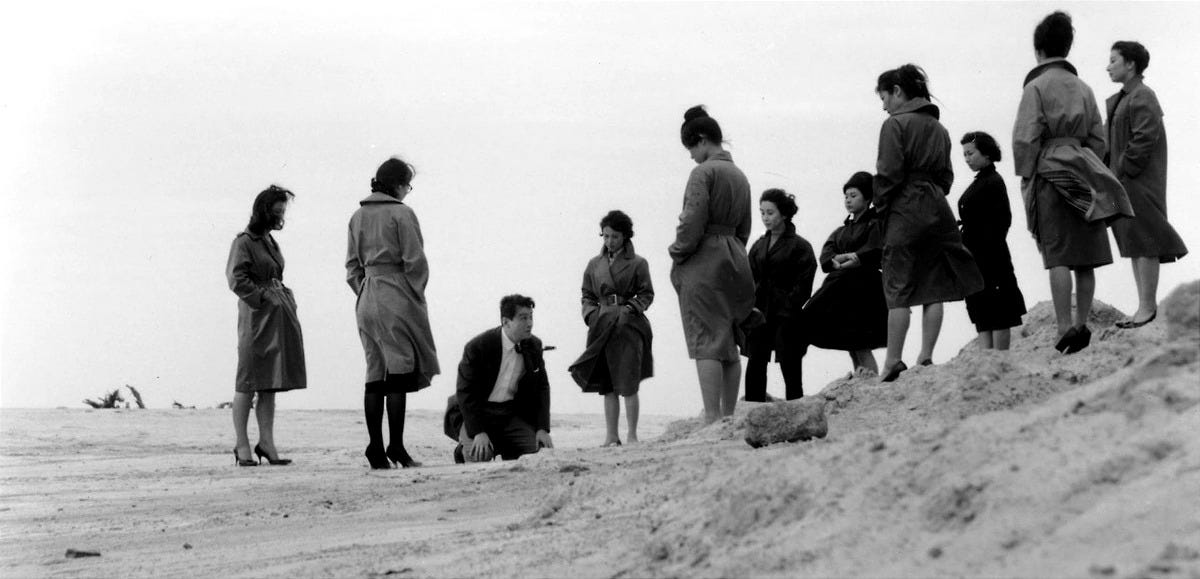
Friends, I’ve been on a new cinematic adventure! After the Vancouver International Film Festival wrapped up and I finished my final dispatch at the end of October, I gave myself a few weeks to binge Buffy the Vampire Slayer and reset my brain. (It works, by the way.) After that, it was time to check out some physical media releases that have been sitting on my shelves, untouched, for far too long. As I thought about what the next piece for Rewind & Revive would be, I realized I had two Kon Ichikawa titles to check out, both released by Radiance. Naturally, I decided to watch a few more Ichikawa films (and a documentary!) before tackling the two on my shelf: 1961’s Ten Women in Black and 1976’s The Inugami Family.
And here we are, weeks later!
So, what have I discovered? That trying to pin down Ichikawa through his filmography is no easy task. Ichikawa began his career in animation before moving into live-action cinema, where he spent decades navigating everything from incredibly harrowing war dramas to domestic comedies to literary adaptations and murder mysteries. Simply put, the man was a chameleon. Yet, one thing apparent across all the works I’ve seen so far is his equally adaptable sense of humor. Even in his most macabre films, it still surfaces.
This brings us to the two Radiance releases, both of which do a phenomenal job showcasing that very malleability, separated by 15 years. Ten Women in Black, written by his wife and longtime collaborator Natto Wada, gifts us with a delightfully nasty black comedy about a philandering television producer and his — you guessed it — ten women. Meanwhile, The Inugami Family, which became a personal favorite of mine, plunges us into a twisty, atmospherically gothic detective mystery in which a deceased patriarch’s will throws his descendants into turmoil.
Both films find women dealing with the fallout of men’s decisions. But they’re worlds apart in genre, and Ichikawa adapts his visual language to each without losing his sharp sense of humor.
Let’s rewind and revive.
Ten Women in Black (1961)
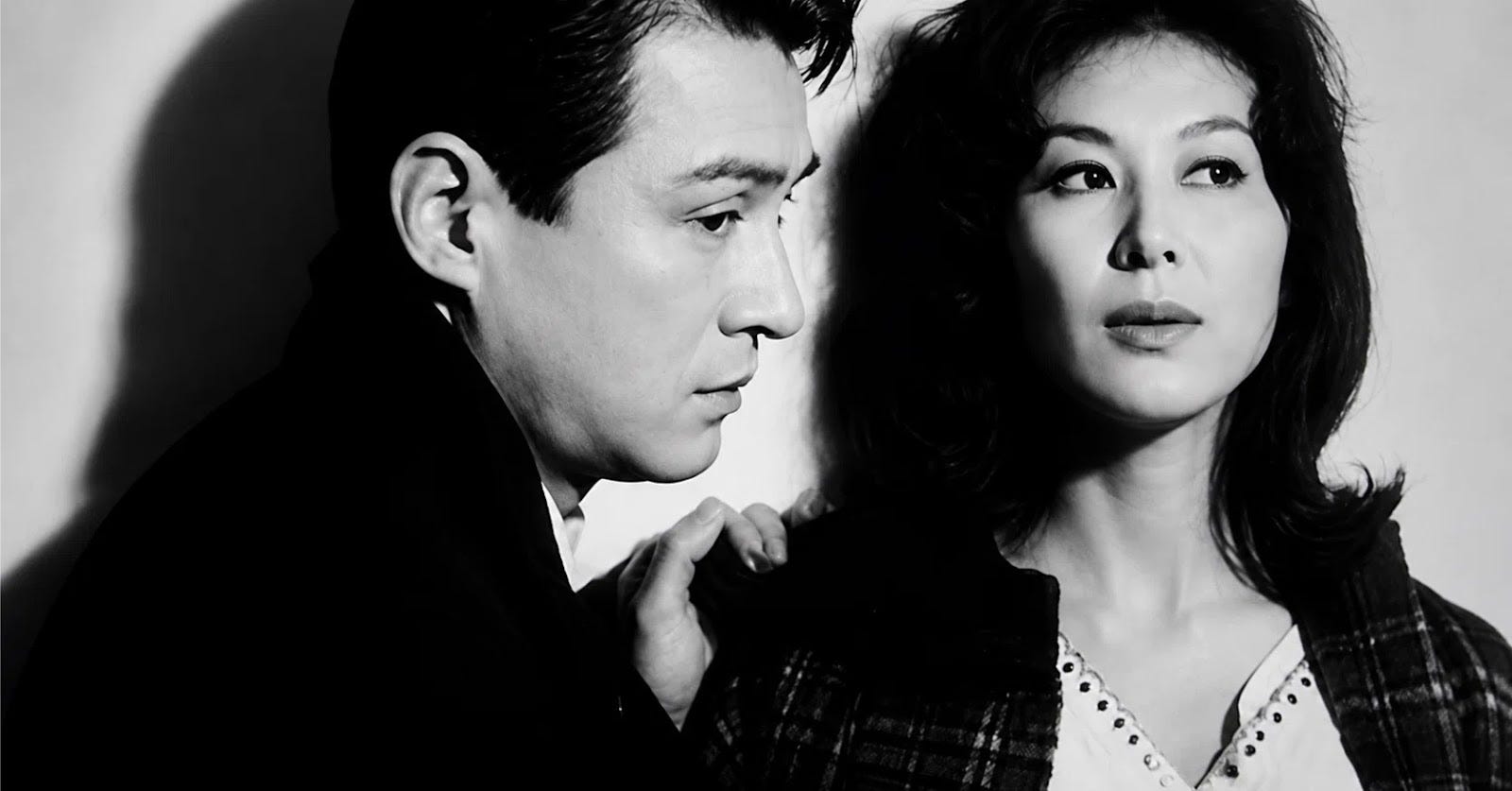
Kon Ichikawa delivers such a tonal shift in the opening of Ten Women in Black that it’s nearly whiplash-worthy. Accompanied by Yasushi Akutagawa’s romantic score, a procession of women smile sweetly at the camera as the opening credits roll and the cast is announced, their faces lit in soft, flattering light. As soon as the credits finish, the music stops, and we’re jolted into a nighttime scene as a woman walks… and the other women stalk her. One even removes her heels to sneak more quietly, but before long, the women chase their target through the streets. Madness!
We then cut to the man himself: television producer Matsuyoshi Kaze (Eiji Funakoshi), who’s leaving yet another woman’s home. Kaze may be at the center of the story, but the women really drive the action. Written by Natto Wada, the film gives its female ensemble far more to do than simply quarrel over a man. She was one of Ichikawa’s most important creative collaborators, and Ten Women in Black was one of her original screenplays. Wada often wrote strong-willed, unapologetic women, while her male characters tended to be more frivolous and unreliable. Kaze certainly fits the bill.
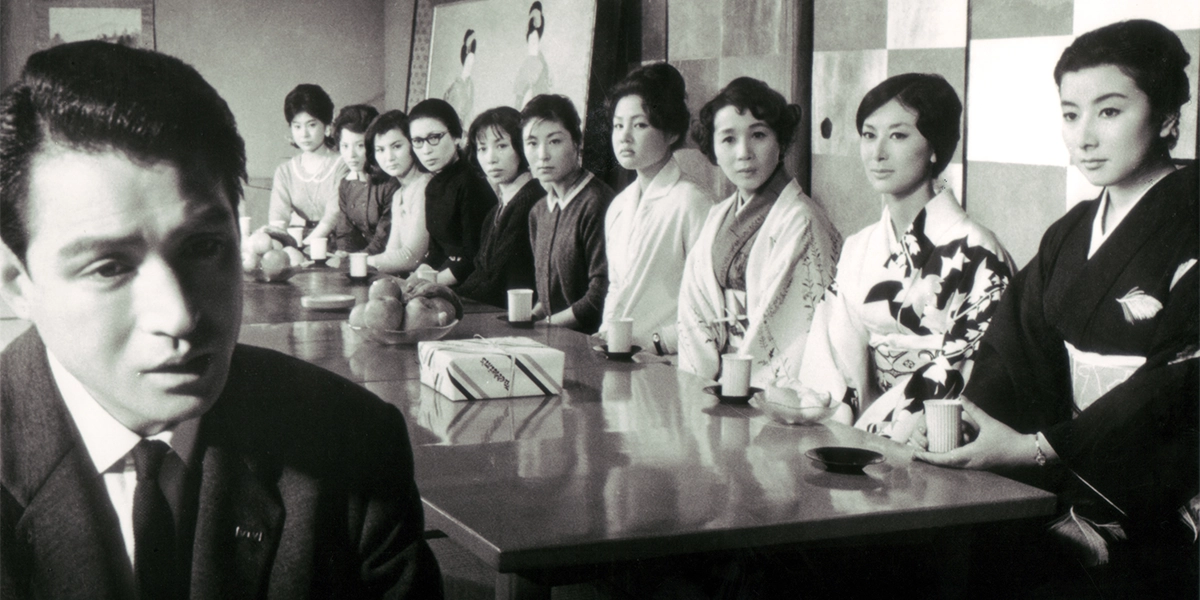
We don’t spend too much time with Kaze before we’re back with our bickering heroines. Ichikawa’s meticulous visual style is another great pleasure of Ten Women in Black, aided by Setsuo Kobayashi’s arresting black-and-white cinematography (seriously, just take a look at that Radiance cover). Kobayashi was renowned for his use of contrast and negative space, and one composition in particular stood out to me: six women clustered on the far right of the frame, leaving the rest nearly empty. The cement wall’s rigid lines contrast with their overlapping bodies and differing postures, creating a sense of visual disorder. They’re bursting with personality, and they don’t even have to dominate the frame.
I’d be remiss not to dedicate some time to the most important woman of all: Kaze’s wife, Futaba (Fujiko Yamamoto). She may just be the most entertaining of the bunch: calm, cool, collected, and totally in charge. When one of the mistresses visits her, distraught over Kaze’s Casanova lifestyle, Mrs. Kaze casually reveals that she knows about even more mistresses than her visitor does, quipping, “Some of them have even become friends.” Having long since given up worrying about her husband’s affairs, she’s focused on running her own business, content with the life she’s built for herself. But that doesn’t mean she’s entirely indifferent to Kaze, especially when the women begin plotting his murder.
Of course, the women aren’t the only ones behaving outrageously. Kaze, who spends most of the film moaning he’s too busy to deal with his romantic entanglements, has an almost comical attachment to his job. As the women scheme (and then scheme some more), his desperation to return to work becomes one of my favorite running jokes. And beneath all the absurdity? I see Ten Women in Black as a wickedly funny examination of gender politics, where the women take control of a situation long dictated by a man’s selfishness.
The Inugami Family (1976)
It’s a testament to how thoroughly 1976’s The Inugami Family kept me guessing that I didn’t once notice its whopping 146-minute runtime. Based on the novel The Inugami Curse by Seishi Yokomizo, The Inugami Family wastes no time introducing us to the sprawling, seemingly endless Inugami clan and its pharmaceutical empire. Their patriarch has died, leaving behind a will that can only be read once every family member is present. Listing all the family members and internal dynamics would do the film a disservice, so all I’ll say is that what follows is an increasingly elaborate murder mystery involving a disputed inheritance and a deeply, deeply dysfunctional family.
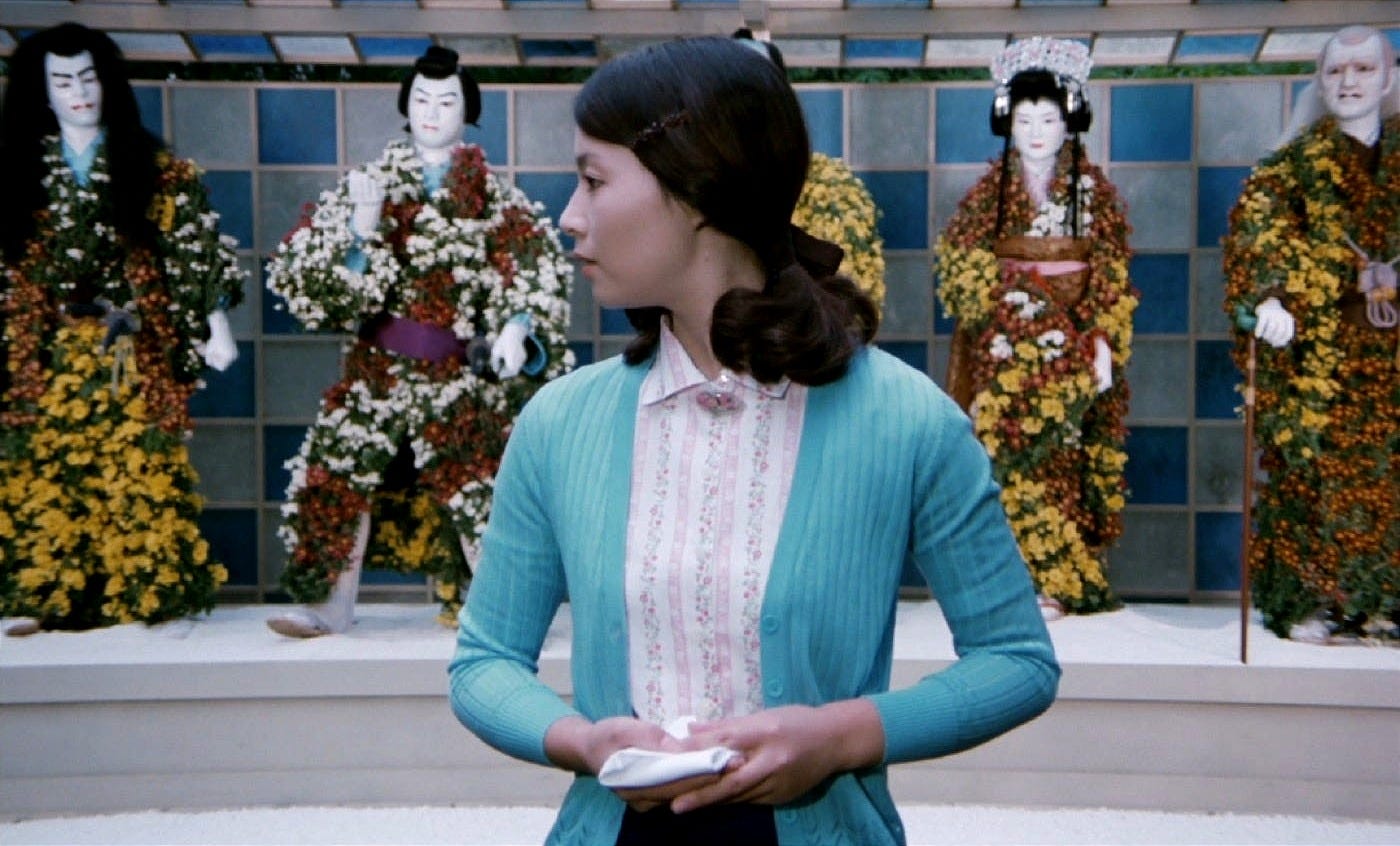
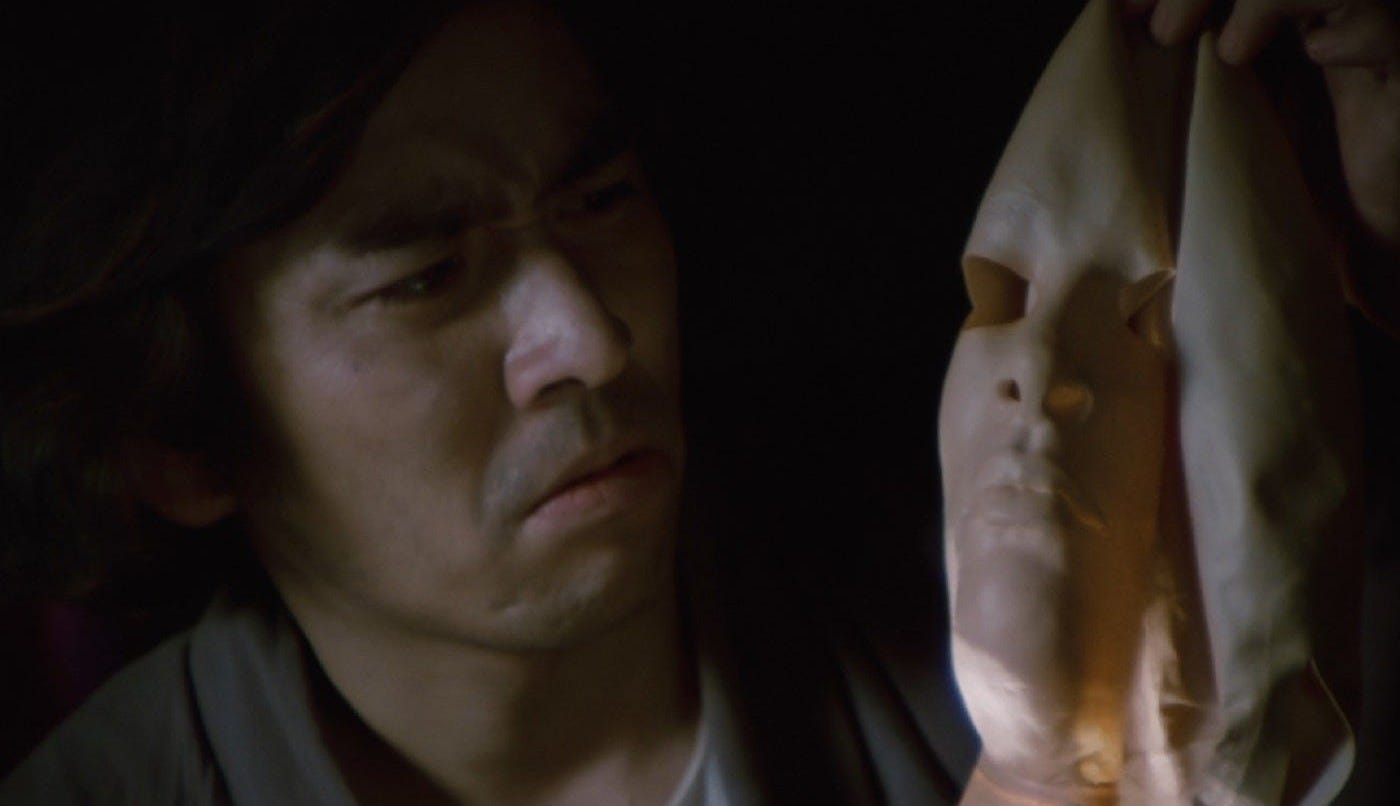
And what a gloriously deranged mystery this is! While Ichikawa seems to take particular delight in the film’s increasingly outlandish developments and its mysterious masked figure, I was equally impressed by just how visually exhilarating the whole thing is. Rather than allowing the revelations to unfold through a parade of exposition, Ichikawa consistently finds inventive ways to make us experience them, whether through rapid-fire editing, changes in photographic texture, or flashbacks that are sometimes overexposed or angled totally off-kilter. That’s not enough for our meticulous maestro, though, and sometimes Ichikawa will simply interrupt all the action with freeze frames that give the story an almost surreal quality.
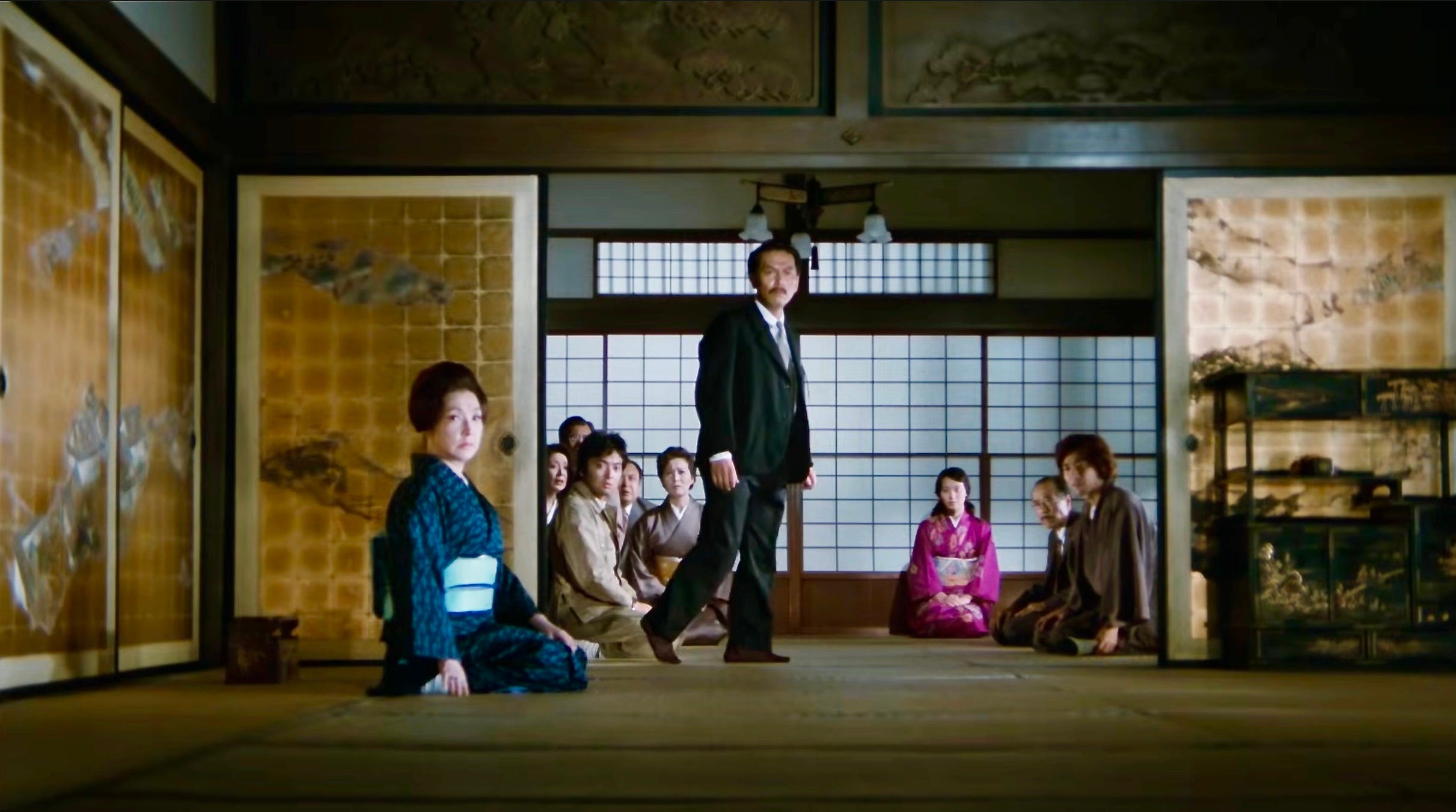
The film’s visual style is a fitting accompaniment to the equally chaotic family, but one character seems almost comically at ease amid the madness: detective Kosuke Kindaichi (Kōji Ishizaka). Rather than embodying the cool brilliance we might expect from a detective protagonist, Kindaichi is unassuming and wonderfully scruffy. Sure, he’s easily distracted by a pretty face or a warm meal, but he’s also far more observant than he initially lets on. Watching him navigate the Inugamis’ increasingly preposterous whodunit provides some much-needed levity, and it’s a blast to keep guessing along with him.
Ichikawa doesn’t abandon his sense of humor when the conclusion rolls around, either. And yet, I still wasn’t prepared for how the resolution would move me, especially after the preceding, gleefully outrageous twists. The Inugamis’ story is ultimately tragic, but Ichikawa doesn’t let us wallow for long. Instead, he returns to our unassuming little oddball hero for one final laugh. The detective work is done, and the world keeps on turning. At least until Kindaichi returns for another Yokomizo adaptation.
Discussion about this post