


Guess who’s back! After three months of preparing for this Rewind & Revive episode (and another week where my voice absolutely went kaput), I’m finally back with some fresh podcast material. Today, we’re discussing Grigori Kromanov’s 1979 Estonian science-fiction mystery, Dead Mountaineer’s Hotel.
As I mention in the episode, I originally sat down expecting I’d watch the film via the Deaf Crocodile release, take some notes, and turn it into one of my usual essays. Instead? Down the rabbit hole I went. One watch became two, plus the commentary track, then the original novel by the Strugatsky brothers, the history surrounding the film (and Estonia itself during this time), and even its video game adaptation. As I looked upon the endless folders of notes, it finally dawned on me: I need to revive the pod (see what I did there?).
Another reason I’m delighted to share today’s chat? I have returning guest Philip Marinello of The Substance Podcast back on — and I also have him to thank for putting the film on my radar in the first place. Initially, I knew almost nothing going in beyond the fact that a handful of people whose taste I trust adored it. Now? I’ve joined the club.
Together, Philip and I get into Kromanov, the Strugatskys, Soviet Estonia, Sven Grünberg’s incredible electronic score, the film’s production history, the Stalker connection, and the questions of authority and identity that eventually swallow the story even more than the avalanche does.
For anyone who hasn’t seen Dead Mountaineer’s Hotel, I’d recommend watching before listening. Otherwise, take a look at my original Letterboxd review below, and come check into the hotel with us.
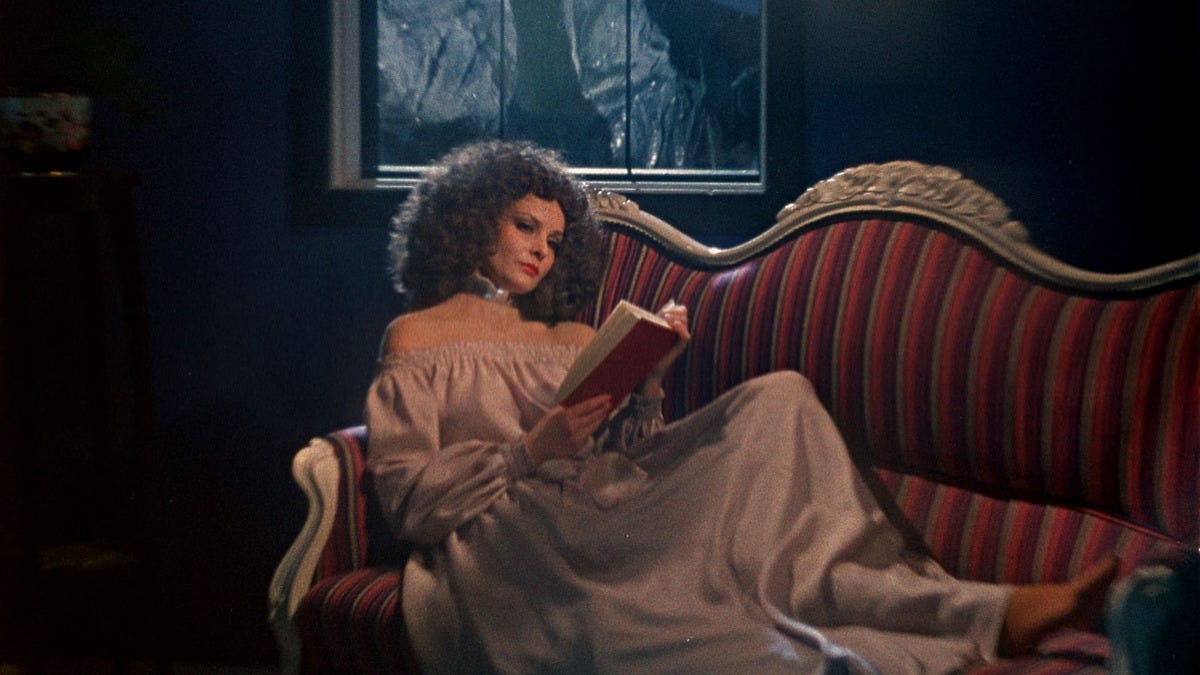
From its opening moments, Dead Mountaineer’s Hotel feels slightly untethered from reality. Inspector Glebsky drives through an isolated mountain landscape while a French report plays on a radio. As he drives, Sven Grünberg’s electronic score floats along, immediately reminding me of an eerier version of Eduard Artemyev’s work on Tarkovsky’s Stalker. Interesting association, considering that both films are based on the novels of Arkady and Boris Strugatsky — who also wrote the script for Grigori Kromanov’s 1979 film. Finally, Glebsky arrives at the eponymous hotel, stranded in isolation. By now, through voiceover, Glebsky has already told us that he still returns to the events that happened here, often on sleepless nights, wondering if he acted correctly.
So naturally, my first thought was: Is this going to be a morality tale?
Once Glebsky steps inside, things immediately become stranger. I was initially expecting a traditional mountain lodge (I later discovered that this was what Kromanov had originally envisioned, as well). Instead, he enters a dark, almost futuristic environment of tiled floors, glass, mirrors, neon, icy blues and steel greys, all occasionally interrupted by pockets of warm hues. The characters he encounters emerge half-obscured from the darkness (or sometimes even simply from above), while reflections multiply across the walls. These people, although many are first-time guests, somehow manage to seem like installations of the hotel itself.
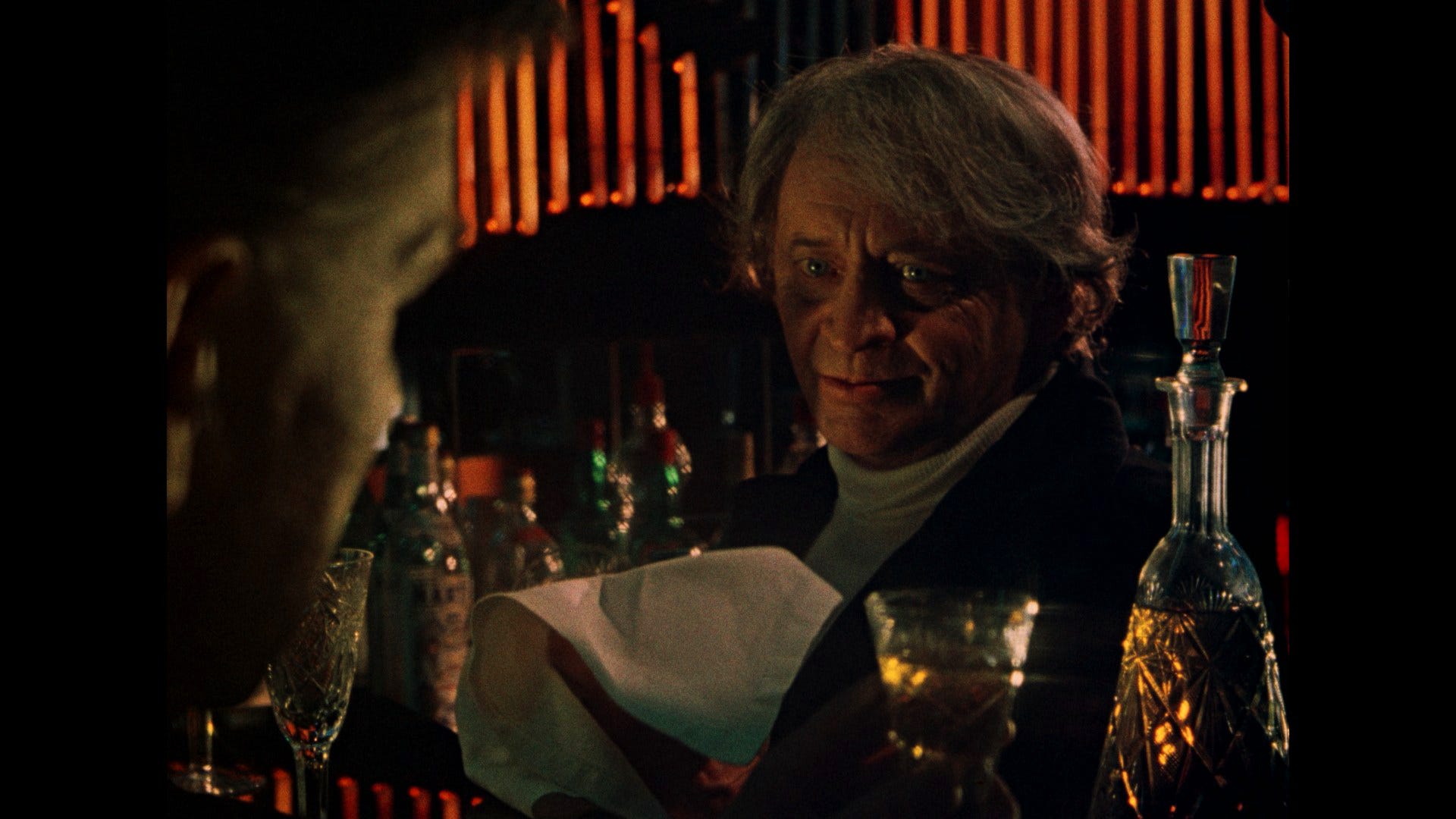
Production designer Tõnu Virve referred to the film’s approach as “hyperrealism,” and that feels exactly right. The hotel is simultaneously inviting and artificial, cozy and claustrophobic. At times, it becomes a kind of beautiful prison. When the avalanche occurs early on, the space is filled with guests wandering, drinking, dancing, and waiting while the world outside becomes increasingly inaccessible.
Glebsky is also a fascinating character himself. Within my first 15 minutes with him, I scribbled in my notes that he looked like a “well-intentioned lawman.” How absurdly comedic that would grow to become. He is calm, handsome, rational, and thoroughly confident in his ability to understand the world around him. He believes in evidence. Procedure. Logic. Categories. So many categories. The problem is that Dead Mountaineer’s Hotel refuses to fit into any of them. What’s more, Glebsky is the only one in the film with a Russian-sounding last name, a detail only bolstered by the fact that he’s played by Latvian actor Uldis Pūcītis, meaning his lines were dubbed. How fitting, then, that in a film so preoccupied with outsiders, even Glebsky’s voice adds another subtle layer of distance between him and everyone else.
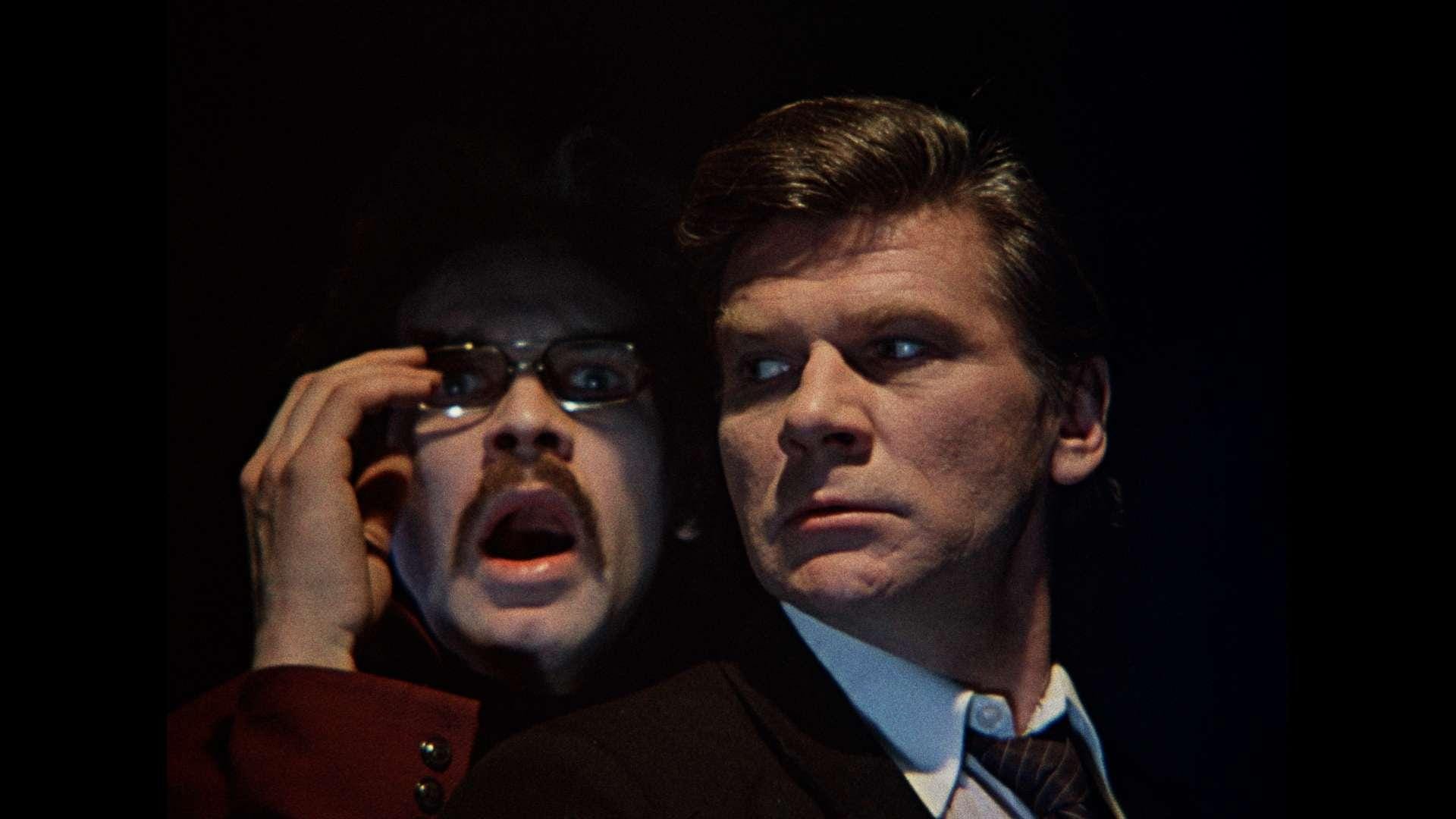
Perhaps what I loved the most about Dead Mountaineer’s Hotel is how often it aggressively wanted me to compare it to other works. I kept thinking of Clue, World on a Wire, Twin Peaks (I could go on), but no comparison truly fit. Glebsky spends so much of the movie trying to make everything fit the categories he understands, and at some point I realized I was doing a version of the same thing as a viewer. By the end, the meat and potatoes are what matter, really: What happens when the systems we trust to explain reality just stop being useful?
Apparently, I’ve been hanging around the Dead Mountaineer’s Hotel since May. Two viewings, a novel, a commentary track, a video game rabbit hole, and way too many Google Docs notes later, I’m still not entirely sure I’ve checked out.
Philip Marinello’s The Substance is a semi-weekly podcast with well over 150 episodes that has conversations to help folks better appreciate goodness, truth, and beauty. There’s a strong emphasis on cinema, with regular conversations with wonderful guests from the film world, as well as shows featuring academics, advocates, and faith leaders working to make the world a better and fuller place.
Follow Philip on Instagram, Letterboxd, and check out The Substance on Spotify and Apple Podcasts.
If you’re looking to buy a copy of Dead Mountaineer’s Hotel, head on over to our friends at Deaf Crocodile or MVD Shop.
You can also listen to or watch this episode on:


