


WOLF (Christian Cargill; UK)
The wolf learned to survive by confronting the world, while the bird sings whether anyone is listening.
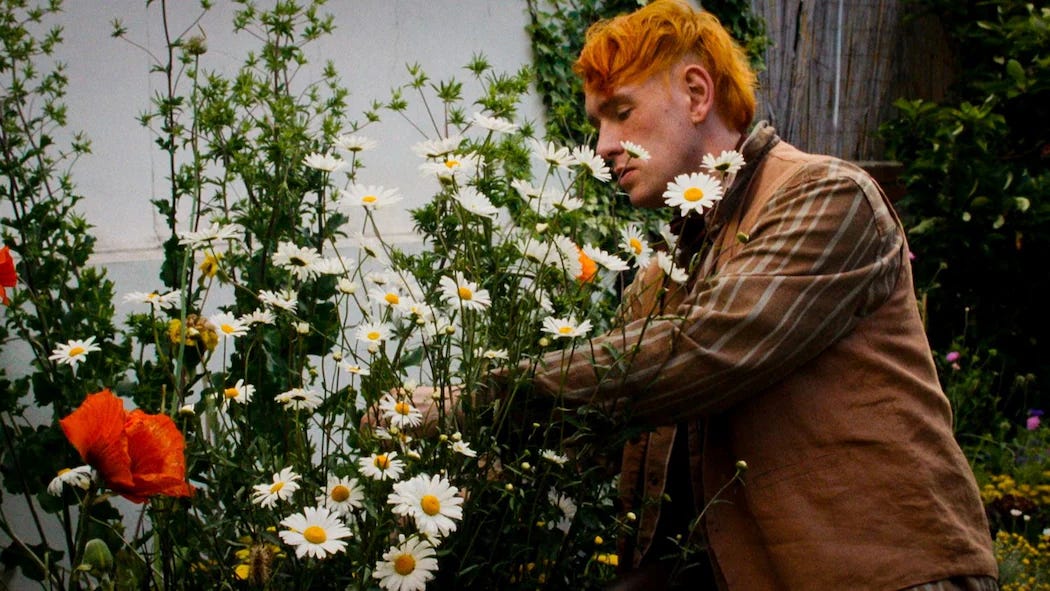
Christian Cargill’s WOLF left me with a warm smile, both for the unique way it profiles pop artist Patrick Wolf and for the gentle affection it shows for its subject. Online synopses describe it as narrated by Tilda Swinton (whom I could listen to for hours), but I’d be remiss not to mention that it’s much more intimate than that. WOLF unfolds as a direct, soft-spoken conversation between Swinton and Wolf off-screen, who, as we discover immediately, have known each other for a long time. The wolf’s image became a symbol of survival in response to the abuse Wolf faced as a teenager. Swinton’s performance in Sally Potter’s Orlando later helped him see himself as a “shapeshifting outsider.” (Side note: If you can, I urge you to turn this into a double-feature with the 1992 film!)
Meanwhile, Cargill lets their exchanges unfold through childhood home videos, frenetic concert footage, beautiful hand-drawn animations, and tranquil images of Wolf painting and tending his garden. Both are important to his life, but I found the latter especially touching. A garden involves knowing when to nurture and when to cut back, and it becomes an incredibly evocative way to approach the weight of grief Wolf carries throughout the film. Both Cargill and Wolf don’t shy away from the struggles that left him unable to make music for years, but they never become the sole focus, either.
That brings me to the repeated imagery of the birds. They recur throughout the film, both real and illustrated, in diary pages, and even in artwork done by Wolf’s mother. As Wolf says in the film, “A bird will sing, and it’s lovely if someone happens to be walking by, but that’s not the reason why it sings.” The bird sings as an expression of being alive, and, ultimately, the boy who once imagined himself as a wolf capable of fighting back becomes a man who finally finds freedom in singing.
School for Defectors (Jeremy Workman; South Korea/USA)
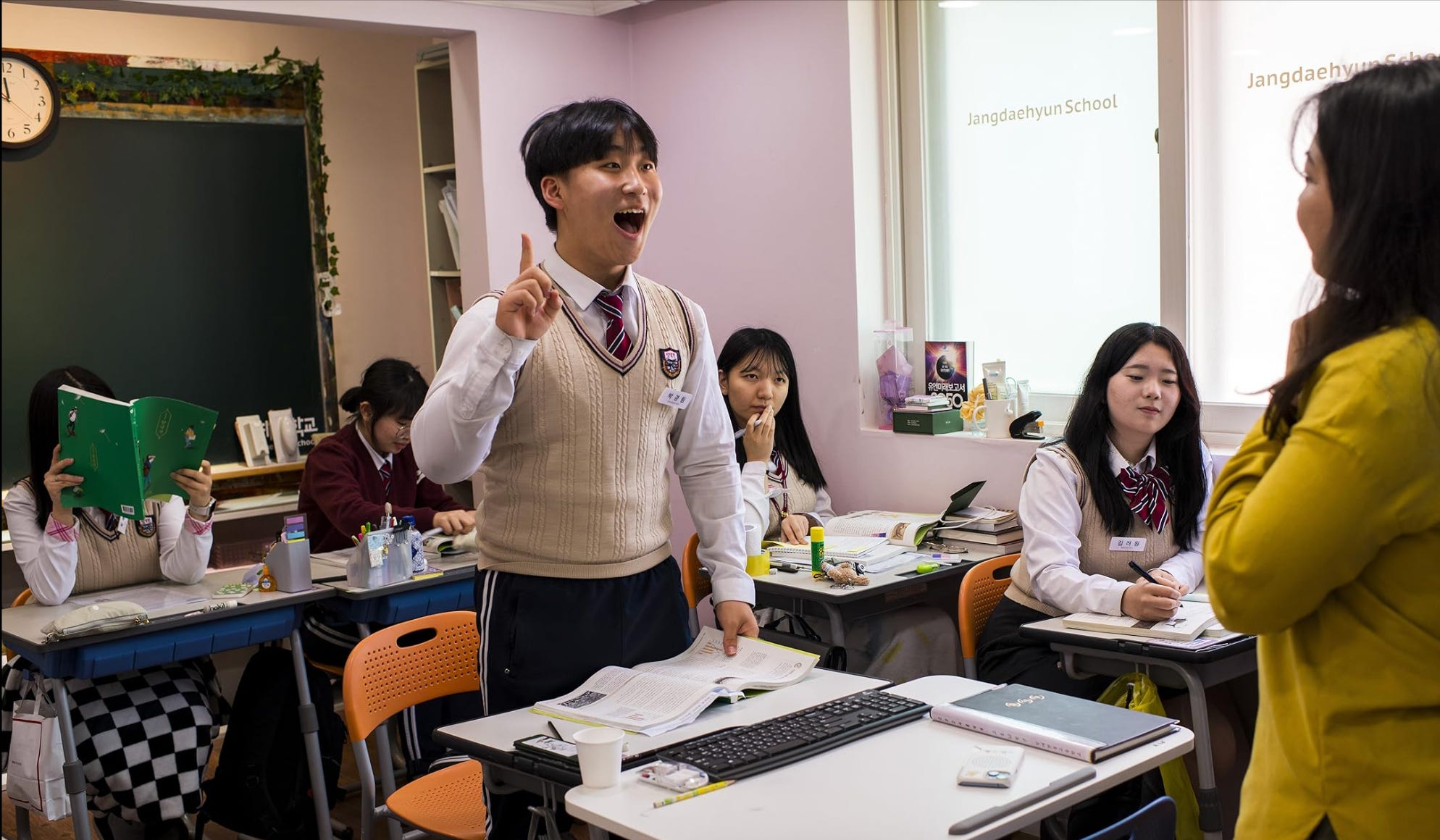
At one point in School for Defectors, three girls rehearse a K-pop routine in a room lined with educational posters about North Korean prison camps. It’s a brief image in this 92-minute documentary, but it captures the balance Jeremy Workman keeps returning to: students trying to live ordinary teenage lives while carrying enormous histories with them. The students in question are all children of North Korean defectors and are enrolled at Jangdaehyun School (JDH) in Busan. JDH has only 20 students, making it the smallest of these specialized schools.
School for Defectors opens with a deceptively simple question a teacher poses to the students: imagine what you’ll look like in ten years and what kind of work you’ll be doing. We’re given the opening credits instead of any responses, but the teacher tells us something important, which ends up acting like a credo for JDH itself: “We are dreaming forward with hope.”
I appreciated that Workman gives plenty of space to the trauma surrounding these families, from learning about the incredibly perilous escape journeys to discrimination from classmates after arriving in South Korea. He never lets the film define its students by that history; instead, we watch them dance (pay attention to Philip’s incredibly slick moves), play video games, worry about college, go to the beach, and cheer on classmates when they succeed. As the school’s principal explains, grades are undeniably important, but they want to offer a community where these kids can figure out who they want to become.
That idea is really fleshed out through a student-led book project we watch develop from start to finish. As I circled back to the film’s initial question, I realized what I watched unfold wasn’t really abstract anymore; these kids are already working through the process of building what’s to come.
Gasmask (Harry Cepka; Canada/USA)
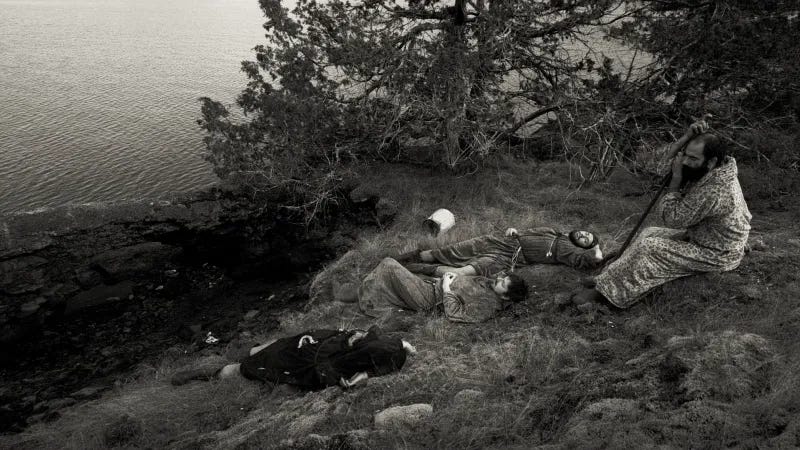
Imagine civilization collapsing. What do we turn to? Memories, I’d imagine, though our methods of remembering will inevitably differ. In Harry Cepka’s Gasmask, we watch people in this post-apocalyptic world scavenge old phones, photos, movies, sounds, and electronics, all in an attempt to remember. One remembers by playing, another by moving, and another by searching. All the while, the narrator records everything on an old phone, as if making new memories might be the key to unlocking the old ones.
But what happens when one doesn’t want to remember? We see the reverse play out, too, giving the film a poignant opposition: What survives when technology dies, and, more importantly, is remembering always worth preserving?
Shot in stark black and white and slipping between moving images and still photographs à la Chris Marker’s La Jetée, Cepka makes a dystopian poem that circles these questions of what memory is for. And maybe that’s what has stayed with me the most in the weeks since watching the World Premiere at VIFF: that memory is never passive, no matter what we do.