


Look Back (Hirokazu Kore-eda; Japan)
I initially wondered whether we really needed a live-action version of Look Back, since the animated adaptation of the manga came out two years earlier. In hindsight, the film seems ridiculously suited to Hirokazu Kore-eda. As he shared in a pre-recorded message to VIFF audiences, Look Back is about “friendships, encounters, and farewells.” That’s when I was assured I was in good hands (why did I ever doubt him!). Everything he said is basically catnip for a filmmaker this attentive to memory and human connection.
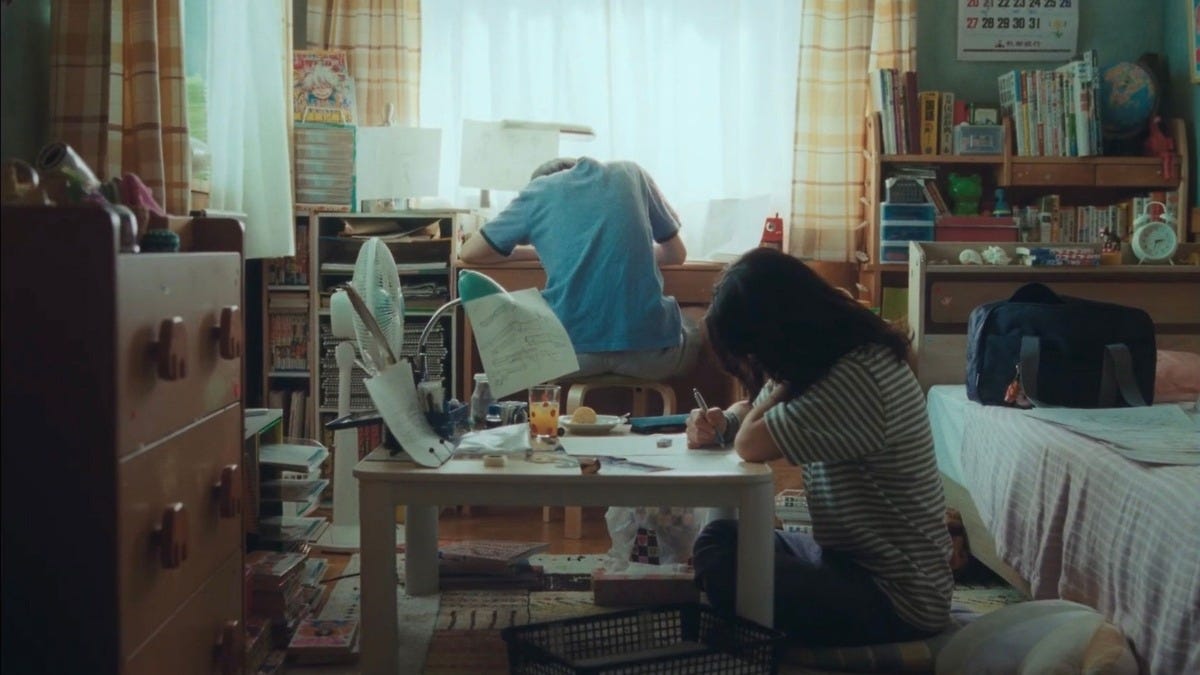
Having seen the 2024 anime, I was impressed by how faithfully Kore-eda preserves the emotional beats while letting the live-action version breathe a little longer. The attention to detail is beautiful throughout, with incredibly faithful recreations of certain areas, like Fujino’s room, or similarly, the initial appearance of Kyomoto.
I loved how Kore-eda allows the duo’s friendship to develop as we watch the seasons change (so many happy trees and landscapes, à la Bob Ross!). Yuta Bandoh’s gentle score is gorgeous, but so are the repeated images of the girls drawing against lush outdoor scenery. It’s these sorts of moments that made me get cozy in my seat and allowed me to get whisked away as I watched their shared obsession gradually become a life.
I’ll admit that the anime hit me harder emotionally, though I also believe that may be because I knew exactly what was waiting for me. Yet, Kore-eda finds his own tenderness in the material, and an answer to a question I’m sure has plagued many a creative: why keep making art when it can hurt this much?
Ba’s Book (Ashley Duong; Canada)
In Ba’s Book, Ashley Duong admits pretty quickly that straightforward interviews with her family weren’t getting her very far. “I can’t remember that period of my life anymore,” her grandmother tells her, while her father, who has already written a memoir, struggles to talk openly about what those memories mean.
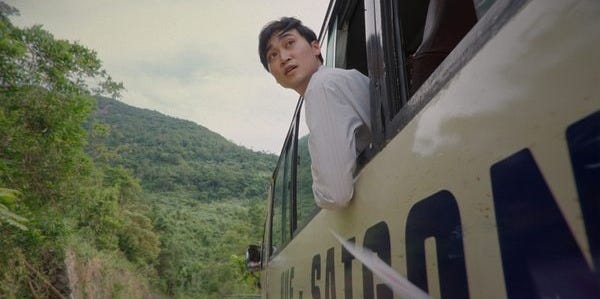
What’s a documentarian to do? Duong settles on a new approach: she travels to Vietnam, where she meets her family members and stages scenes from her father’s past with younger relatives. Using his book as a guide, Duong covers his childhood in war-torn Vietnam, his years in Iran during the Iranian Revolution, and his eventual path to Canada. As her family members watch these recreations, she allows them to interrupt and correct the scenes. Suddenly, the memories — and emotions — flow.
That’s what fascinated me most about the film: how cinema itself becomes the language this family seems to need. As the film draws to a close, Duong says something beautifully simple that perhaps explains Ba’s Book best: “My dad’s book wasn’t for me, and this film isn’t for him. But maybe this is just how we show up for each other.”
Nowhere to Lay My Eyes (Hong Sangsoo; South Korea)
Seeing before naming. That’s what jumped out at me while watching Hong Sangsoo’s surprisingly gentle Nowhere to Lay My Eyes. Perhaps I had last year’s polite implosion, What Does That Nature Say to You in my mind a bit too much. Nevertheless, it’s still a deliciously slippery Hong outing.
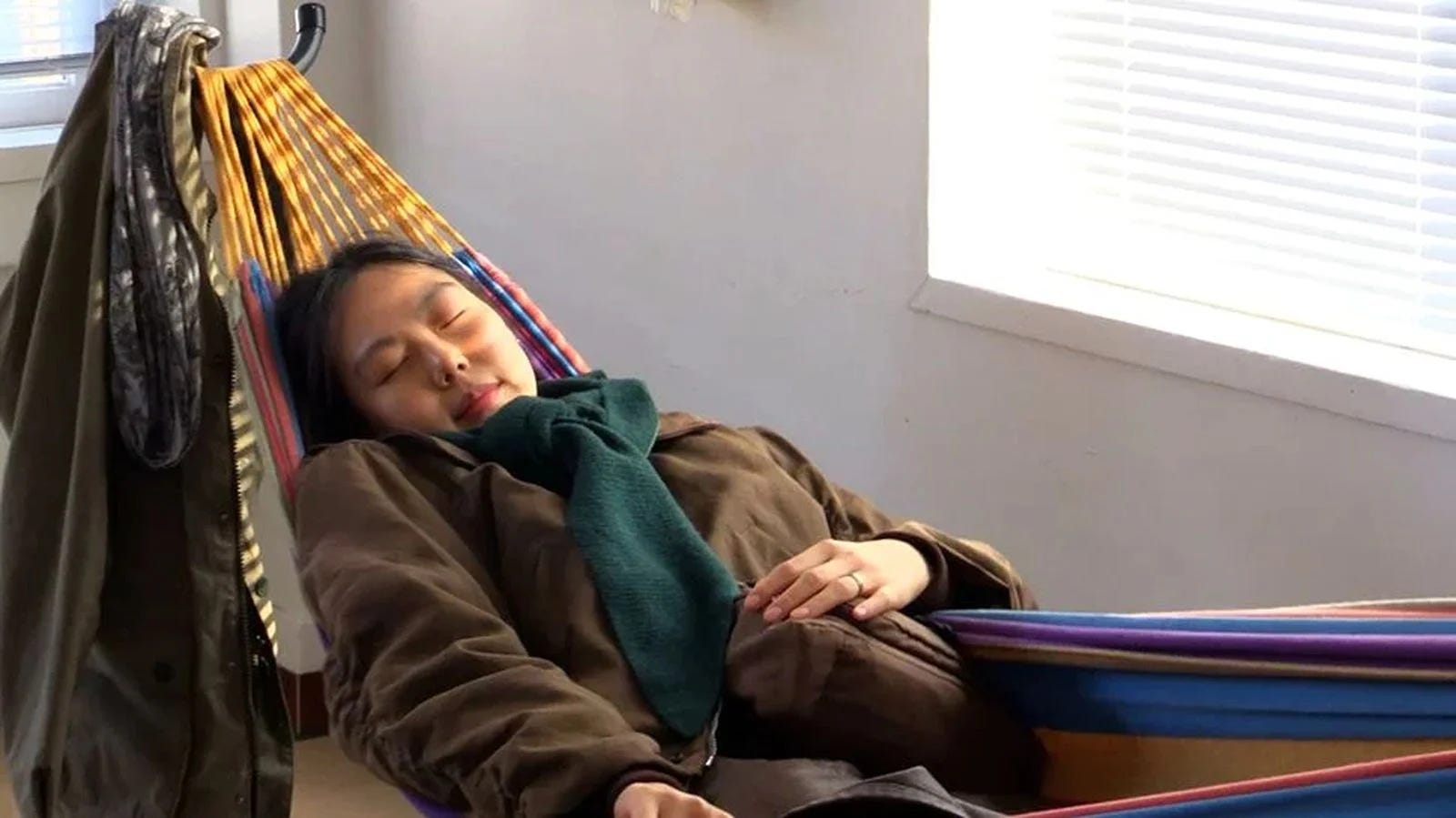
Sanghee (Kim Min-hee) arrives on Jeju Island with her brother to visit her mother and stepfather. She hasn’t seen her mother in years, though we soon discover her younger sibling has been making secret trips. Discoveries abound in this 73-minute outing, as Sanghee and we also learn that her mother’s new husband has a daughter. With both of these strangers, Sanghee doesn’t quite know what to call them. A familial term? Perhaps later, she repeatedly says. Through it all, everyone seems unfailingly polite and pleasant. Sometimes, it almost feels awkward, though I also write this as an aficionado for the melodramatic.
Hong cleverly refuses to define things too quickly in Nowhere, though everyone else tries to do it for our heroine. Sanghee makes short experimental films by carrying a camera around and waiting for something beautiful to catch her eye, though, as she puts it, she dislikes deciding beforehand what she wants to find. “It feels dead somehow,” she comments. That philosophy begins to seep into the family drama. We listen as her mother presses her to know what the films are for, while her new stepsister pauses and asks her how to live knowing nothing is eternal. Similar to her variation of “later,” Sanghee pushes back on answers.
Of course, we get our classic Hong-isms throughout, and we watch much of the dialogue play out through meals, walks, awkward silences, and seemingly ordinary conversations. For a film this gentle and funny, it left me thinking an awful lot about what happens when we stop trying to, well, name the thing in front of us and simply look at it.
A Place of Absence (Marialuisa Ernst; USA/Bolivia/Mexico)
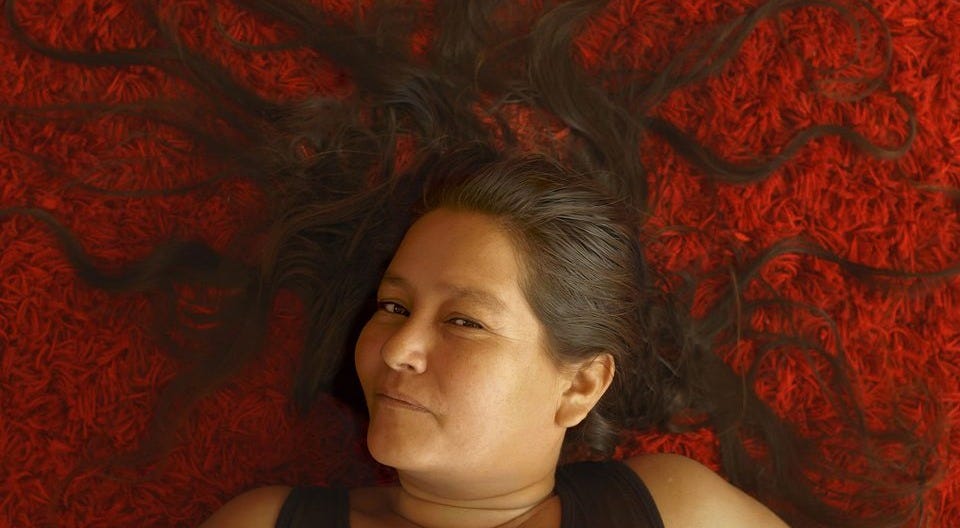
Grief is not passive in Marialuisa Ernst’s A Place of Absence. The documentary is built around a particularly cruel kind of grief, where you still love someone who is gone without knowing what happened to them. Is mourning even possible? You are, as the title says, living in a place of absence. Ernst calls this “ambiguous loss,” and she traces that uncertainty through the Caravan of Mothers of Missing Migrants as they travel across Mexico, searching for children who disappeared along migration routes north.
Ernst wisely avoids reducing these women to sorrow. We watch as they march, organize, speak to lawmakers, and tirelessly search shelters and prisons. But we also see them planting trees, dancing together in the caravan, and supporting one another through years of uncertainty. Their grief is immense, of course, but so is their agency.
The journey with the Caravan of Mothers is connected to the disappearance of Ernst’s uncle Guillermo during Argentina’s dictatorship and the place of absence her own mother has lived with after losing her little brother. As Ernst weaves these threads together, the film becomes increasingly expressive, with nature itself becoming a language of memory. One mother walks barefoot through what the film identifies as the largest mass grave in the Americas, leaving rose petals across the graves. In another scene, we see Guillermo’s photo placed at the foot of a tree in a lush forest. Early in the film, Ernst beautifully shares that one thing she’d love to teach her daughter is the belief “that human beings are bonded to each other from within. Like trees.” By the end, I would say she achieved that goal. A Place of Absence may be heartbreaking, but it’s also never hopeless.