


Club Kid (Jordan Firstman; USA)
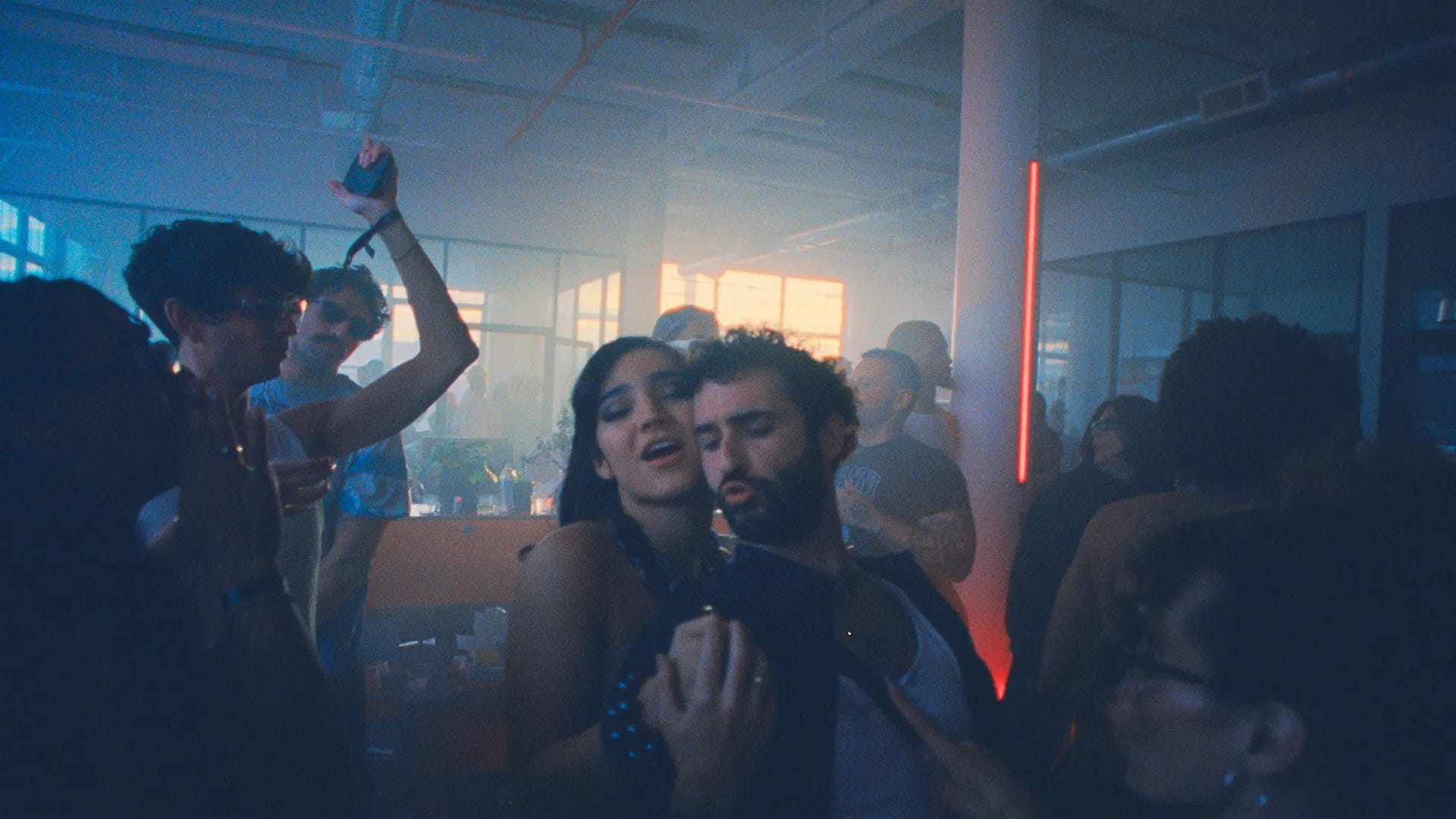
“Let’s do this forever.” Jordan Firstman’s Peter declares this early on in Club Kid, and as the film thrusts us into a blur of bodies and music, it’s easy to get swept up in this hedonistic fantasy. One early shot sets the stage brilliantly: Peter and his friends pile into an Uber as the camera swirls around them continuously. Just another night out on the town, right? A decade or so later, not much has changed for Peter — until his 10-year-old son Arlo (Reggie Absolom) arrives.
Sure, these clubs are loud and messy, but what I appreciated is how Firstman allows this community to fold Arlo into something warm and communal. We see drag queens gossiping with him, Peter’s friends willing to lend a helping hand, and soon enough, we watch Arlo DJ to a room full of adults who adore him. It’s ridiculous and hilarious in equal measure, and the club scenes come so alive that I momentarily thought I could smell the familiar club AC blasting in my face.
Firstman and Absolom perfectly bounce off one another. Peter never patronizes Arlo or treats him like a fragile child. There’s a little Paper Moon in the odd-couple dynamic, though it’s seen through the lens of queer nightlife and millennial arrested development. Funny, sensory, and surprisingly tender, I wasn’t expecting to tear up given its initial party-animal setup. My heart is so very full.
Tangles (Leah Nelson; Canada/USA)
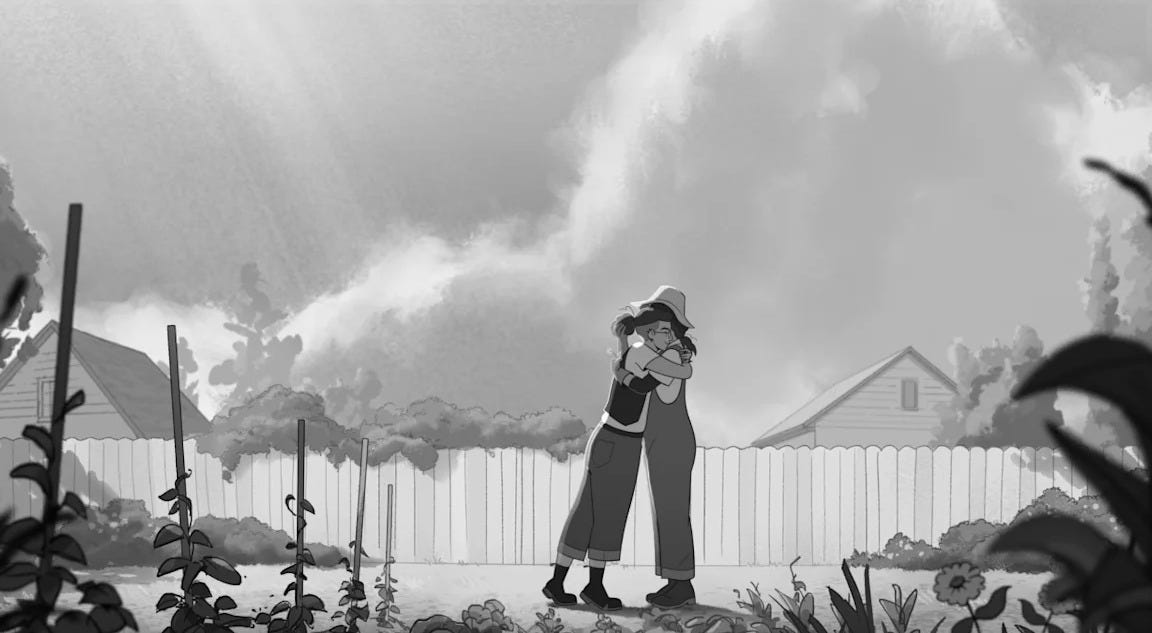
Poignant, bittersweet, and the type of film that made me lunge for the phone to call my mom as soon as it wrapped up. To put it bluntly, Leah Nelson’s Tangles absolutely wrecked me. Adapted from Sarah Leavitt’s graphic memoir — which I strongly urge you to read as well — the film follows illustrator Sarah (Abbi Jacobson) as her mother, Midge (Julia Louis-Dreyfus), begins showing signs of early-onset Alzheimer’s. On paper, this could have become a relentlessly grim tale. What Nelson does with the script, however, with the help of Leavitt herself and Trev Renney, is make it come astonishingly alive. Tangles is funny, romantic, warm, occasionally sexy, and deeply attentive to the ways ordinary life must keep moving, even when something devastating has entered it.
One big aspect of Sarah’s life is her relationship with the ever-calm-and-cool Donimo (Samira Wiley), which gives the film a beautiful queer love story. This also introduces another layer to the film: how the partners of caregivers to those with Alzheimer’s must navigate this new and unknown landscape. Sarah is falling in love, trying to build her career as an artist, fighting with her family, screwing up, laughing, and figuring out who she is, all while her mother’s illness begins consuming more and more of her world.
The hand-drawn animation is an absolute standout. Mostly rendered in black and white, the film also allows for occasional color, water, monsters, and other surreal flourishes to erupt whenever Sarah’s emotions overflow. Midge’s diagnosis transforms into an image of sinking dread and drowning, while the anxiety of returning home becomes Sarah literally wading through water.
Louis-Dreyfus gives Midge such warmth that watching her change is devastating. Bryan Cranston, as her husband, Rob (my favorite “dad” performance of Cranston’s since Malcolm in the Middle), also shines as a man who initially brushes off the reality of the situation only to try and hold everything together as the disease progresses.
Tangles refuses to let Alzheimer’s become the totality of anyone’s life. What I appreciated most about it is that it understands the nuances of grief. I sobbed through chunks of this, though I also laughed constantly. What a beautiful film.
The Debut (Jesse Eisenberg; USA)
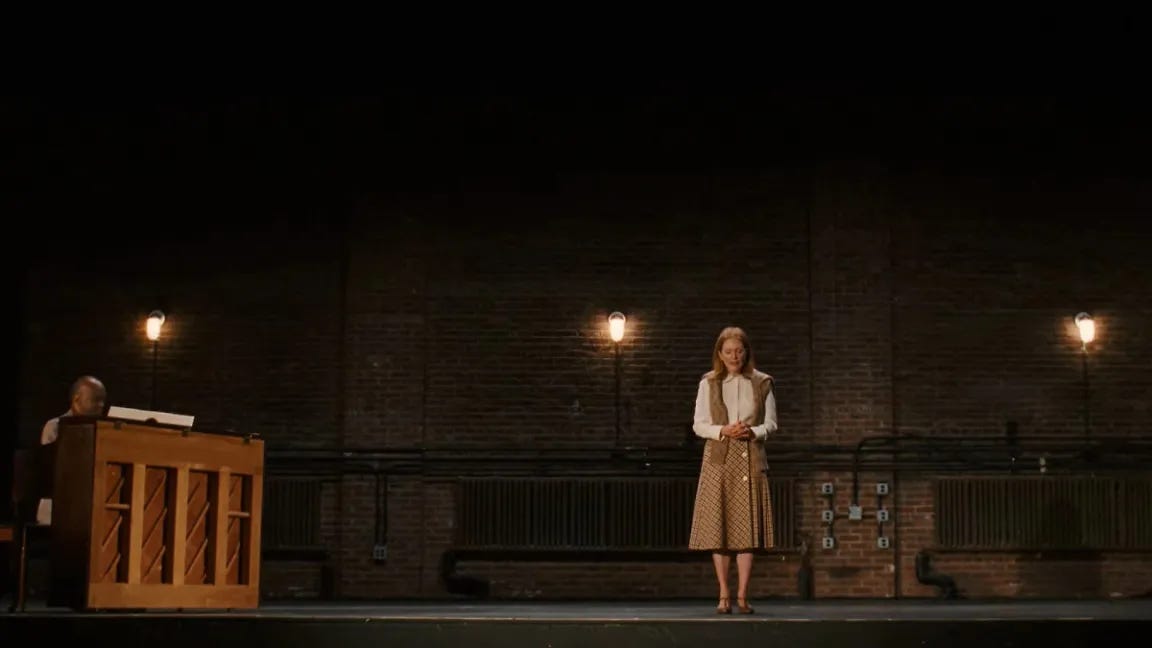
The Debut opens initially with the buoyancy of a musical, before quickly revealing the sharper teeth we’ve come to expect from director Jesse Eisenberg. Julianne Moore is phenomenal as Mona, a meek suburban housewife who decides one day she’s going to audition for a New Jersey community-theater production of the fictional musical, Nosy Neighbors, with songs by Eisenberg. What we come to see, however, is how consumed Mona becomes by the role itself. I kept thinking about her role in Todd Haynes’ Safe, another film where Moore plays a repressed housewife slipping into an altered reality, but in The Debut, she mischievously subverts that familiar fragility. Mona may be painfully awkward and initially quite naive, but she’s also ferociously determined.
Shot on warm 16mm and filled with some terrific long takes, The Debut has the scrappy theatrical chaos of Peter Bogdanovich’s Noises Off, complete with explosive rehearsals, eccentric actors, and an exacting director by way of Paul Giamatti’s always-superb neurotic form. Eisenberg may poke some fun at this world, but it’s clear he absolutely loves these people.
The Debut is a satire built for the big screen, and at VIFF’s opening night premiere, the audience would erupt in raucous applause and cheers on the regular. Though, what surprised me the most was the film’s sweeter register. We come to see that while Mona’s family barely registers her, the theater gives her a found family of her own (along with many bananas!), and a tool belt for her character that becomes a form of armor for tackling this new terrain. By the time we reach the climactic performance, Mona’s transformation is equal parts absurd and utterly electric. The Debut is ultimately about finding your voice, but also what happens when someone finally gives you the room to actually use it.
Tenor: My Name is Pati (Rebecca Tansley; New Zealand)
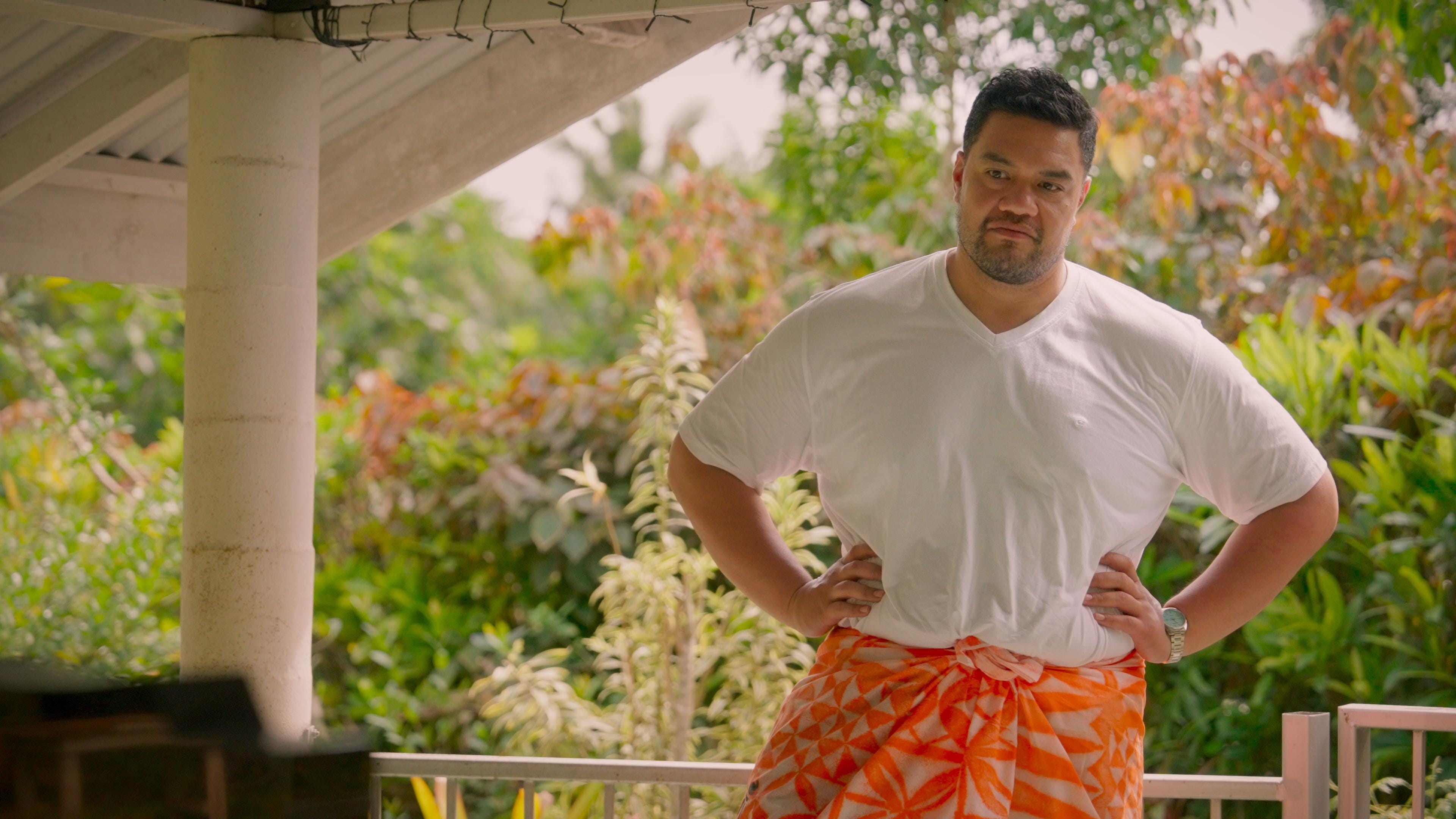
As I geared up to watch Rebecca Tansley’s Tenor: My Name is Pati, I initially wondered why it wasn’t called My Name is Pene, considering it tracks Pene Pati’s extraordinary rise through the opera world. After watching the documentary, I realized why: it isn’t a story about one man succeeding alone. In Tenor, family is everywhere. Born in Samoa and raised in New Zealand, Pene grew up surrounded by music, something we see through a glorious abundance of home videos, alongside his relationship with his brother, Amitai, a fellow tenor and also a rising opera star. What stuck out the most to me, however, is the communal Samoan understanding that success belongs to everyone who helped build it. Pene carries the torch beautifully.
Tansley fluidly moves between these intimate family spaces and the almost absurd grandeur of the international opera circuit. One moment we see Pene back home doing chores to help his parents, and the next he’s commanding a stage in Paris, Berlin, London, or New York. Early on, Pene identifies himself as an emotional singer first, and it’s easy to see that in his immaculate performances, but also in the pressure he carries to represent his family and community.
The final stretch, which I dare not spoil, absolutely got me. Seeing a certain milestone after hearing something Pene longs for early on gives the film its perfect emotional payoff. Tenor is joyful, generous, and incredibly moving.
Fa'afetai lava (thank you so much) for your review of Tenor: My Name is Pati. We're thrilled you enjoyed our film 🌺