


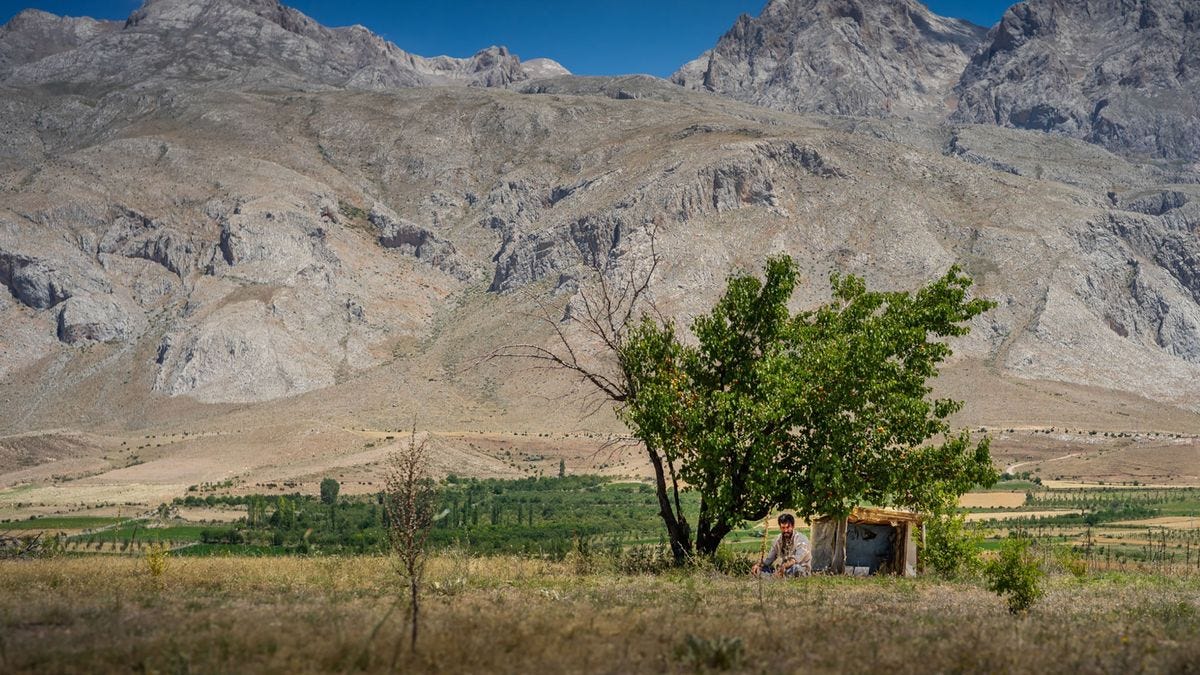
Which parts of ourselves survive the stories we rewrite? In Iranian writer-director Alireza Khatami’s The Things You Kill, a man tries to escape the narrative that shaped him — as a son, as a husband, as a “disappointment.” Yet even as the land he stands on is dry and the pipes are cracked, the past keeps leaking back in. It begins as a grounded psychological drama, then slips into something feverish, laced with denial and distortion. Khatami removes the safety net of both score and certainty, stranding us in the barren Anatolian landscape — and in the barren places of the conscience.
Ali (Ekin Koç) is a university professor whose life feels like it’s narrowing rather than unfolding as the years go on. His literature course is quietly being phased out, while at home, the pressure to become a father gnaws at something he can’t fix: his infertility. His retreat comes in the form of a second home: a dusty plot of land and a garden he cannot bring to life. After the sudden and suspicious death of his mother, Ali spends more time at a place meant for renewal. Instead, it mirrors his growing unease, where the only things taking root are grief and resentment.
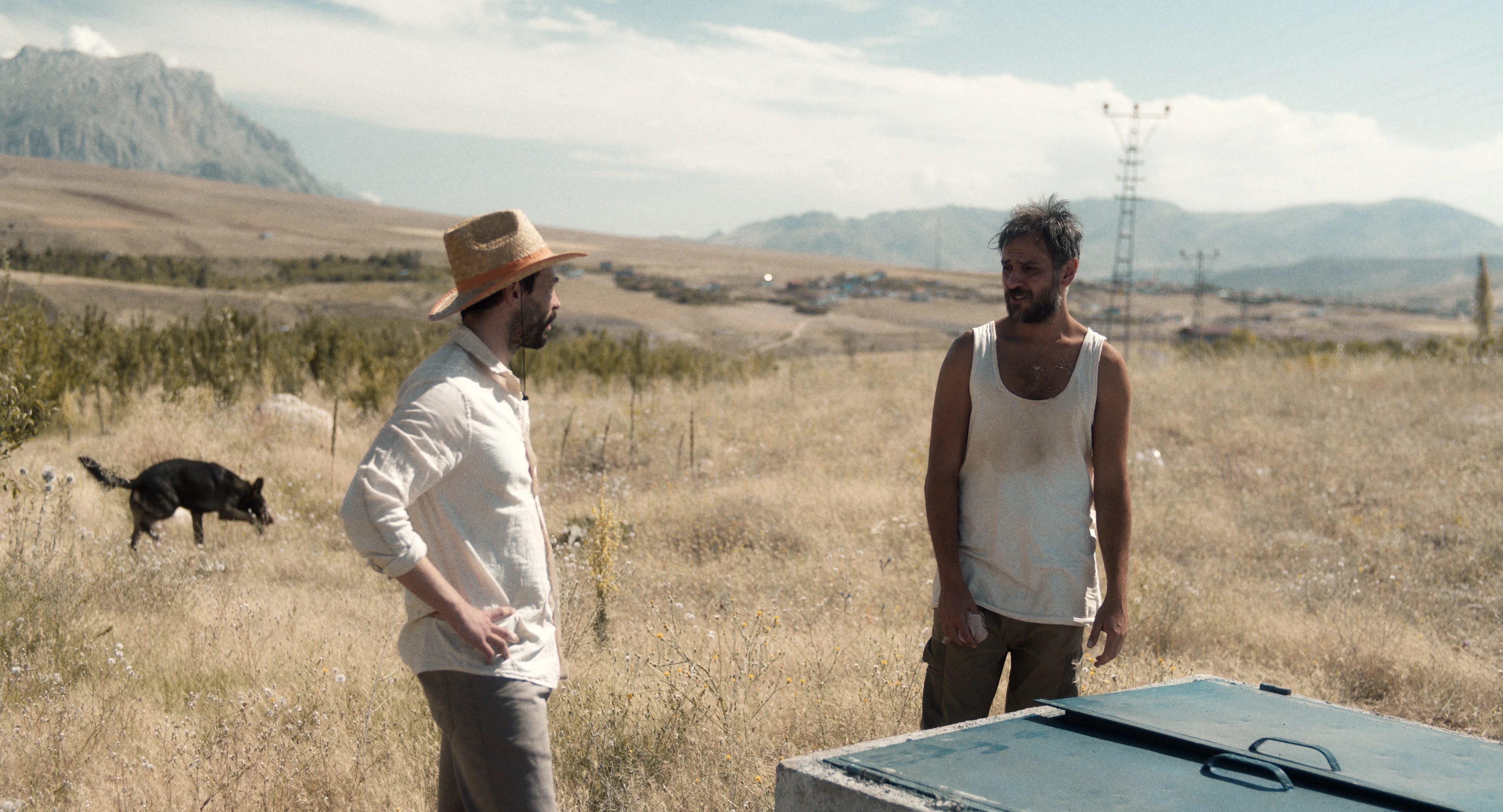
Eventually, Ali’s pain needs some form of direction. Reza (Erkan Kolçak Köstendil), the gardener hired to make his land fertile, becomes the vessel for the emotions Ali can’t articulate. Human memory is slippery; so subjective, so readily willing to contort itself to protect one’s fragile ego.
Khatami literalizes a linguistic idea at the heart of the film: translation. In one lecture, Ali explains that in Latin, translation means “to carry meaning across,” but in Akkadian it can also mean “to stone” — to kill. When you kill the part of yourself shaped by trauma, what dark version rises in its place?
There’s a compelling tug-of-war between identity and illusion. At first glance, the landscapes recall Abbas Kiarostami’s work, and so does Khatami’s willingness to treat cinema as an unreliable narrator. I felt glimpses of Mohsen Makhmalbaf, too, especially A Moment of Innocence, where the idea of reenacting trauma can create a more “bearable” fiction. Translation equals destruction, remember? While many have pointed to David Lynch, I invite you to consider traces of Krzysztof Kieślowski as well, whose films sometimes suggest that every choice creates a shadow self. Following this lineage, Khatami amplifies the same question: What does the other version of us know that we refuse to face?
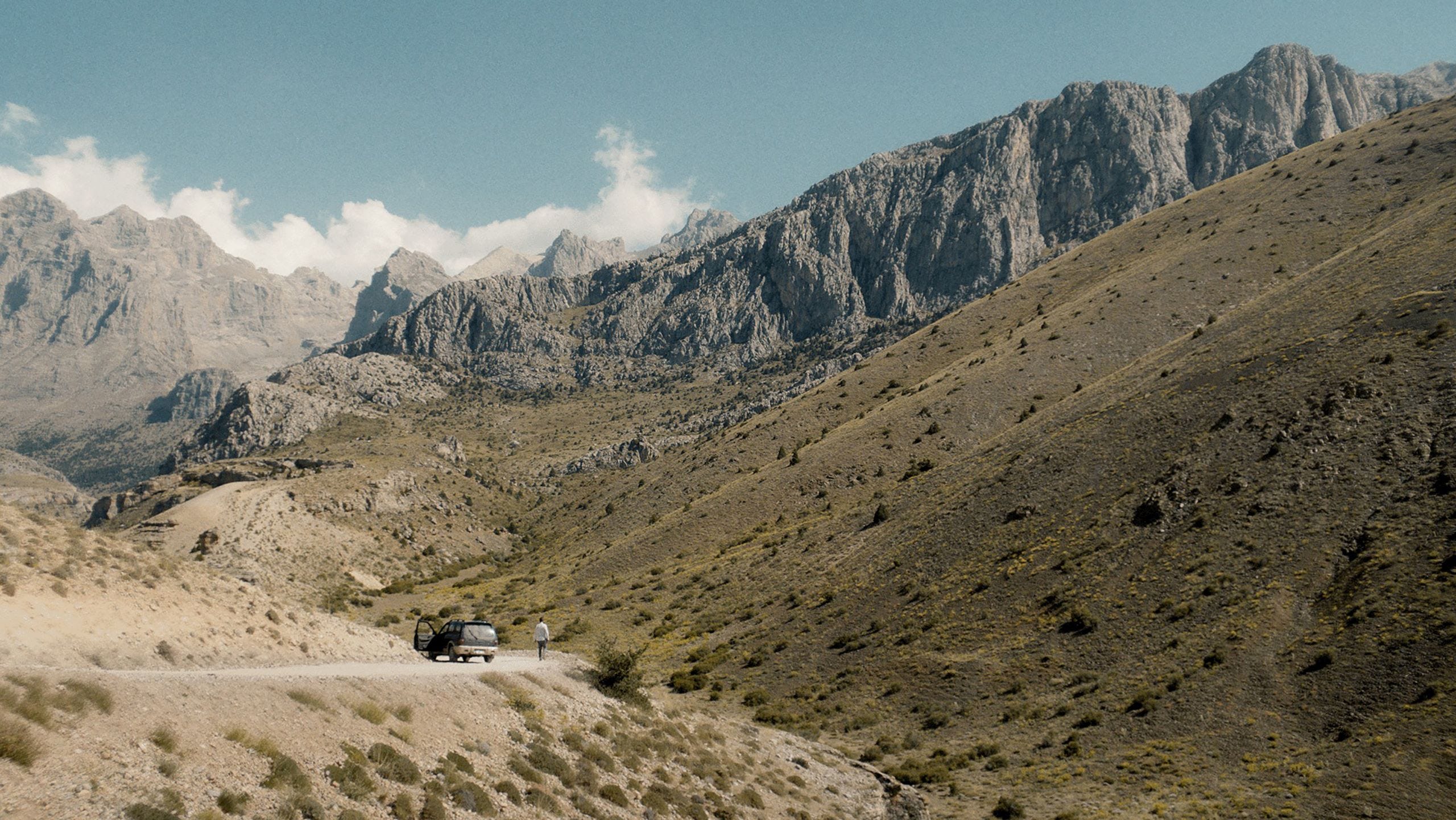
Khatami also rejects a traditional score. In the Q&A that followed the film, he explained his decision to avoid a score because music can manipulate emotion too easily. Instead, he allows the sound design to swell: footsteps, the wind, the countless dogs that bark a chorus throughout. It’s atmosphere as an emotional compass.
That vulnerability extends to performance. When I asked about his collaboration with Koç, Khatami shared: “My main job is to give them the confidence that the camera sees you … Actors are very vulnerable. They bring a lot to the table.” The hardest scene to shoot with Koç was a confession — a single shot in which Ali slips out of focus for what feels like an eternity. Crew instinct said fix it; Khatami said leave it. “Everybody on set was scared — ‘This was a mistake, nobody goes out of focus for 30 seconds.’ But it was the only way to do it.” It becomes the film’s most honest gesture. Trauma makes us look away… and the lens respects that rather than correcting it.
Even the dogs feel like a deliberate metaphor. The first, a German shepherd that lives on the garden property, is only seen by Ali and Reza. Perhaps man’s best friend is tied to shame and secrecy in this instance. In the final act, a new puppy arrives, visible only to Ali and his wife. Hope? Fertility? Denial? Khatami refuses to underline it.
If identity is a story we construct, then love, guilt, and even redemption might be as real as we need them to be. Which leaves us, quite perfectly, where we began: Which parts of ourselves survive the stories we rewrite?
This is a film I appreciated, but you're writeup made me appreciate it even more. Especially drawing on the Makhmalbaf and Kieślowski influences (I also see Lynch, but only superficially, because it never actually feels Lynchian) in how trauma shapes our sense of identity and the narratives we tell ourselves. Still, there's something about the film that didn't quite connect--it's been a month or so and it's almost evaporated from my memory--and maybe it's that haziness you are hinting at that actually undermines some of the impact? Either way, you got me thinking about the themes more deeply so good job! :)