


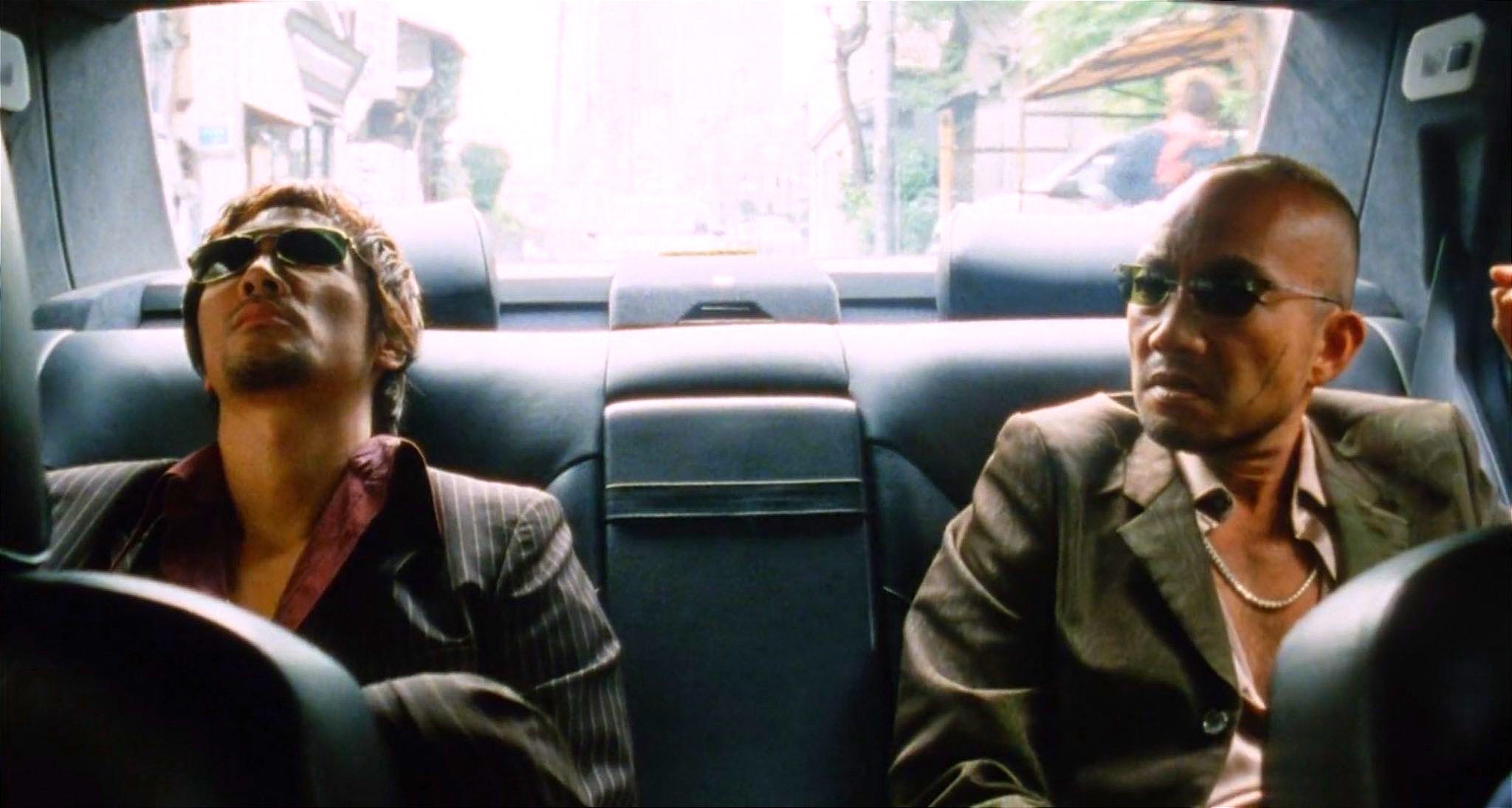
In Takashi Miike’s Agitator, momentum never quite belongs to anyone. The first few minutes are suspended in a deceptive stillness, offering no indication of the scale it’s about to unleash. Minutes later, we’re thrown into motion, packed into a car with yakuza members and staring through a windshield as they speed through crowded city streets. Yet, the shift doesn’t feel like control. If anything, it signals that the world we’re entering is one where that momentum is difficult to track.
That sense of kineticism holds for a delicious beat. After zipping past countless vehicles, the car comes to a halt as horns screech, and our antiheroes continue on foot, running down those same packed streets, fully armed, and bursting into a bar. The fact that Miike took on a guerrilla filmmaking approach for Agitator makes it all the more fraught. Cuts are fast, jumping between the many different members as they all rush through — and then we pause. Door open, guns raised, a snarling pack clad in sunglasses, leather, and double-breasted suits, ready to strike. The result? A man — their boss — sitting alone and whistling.
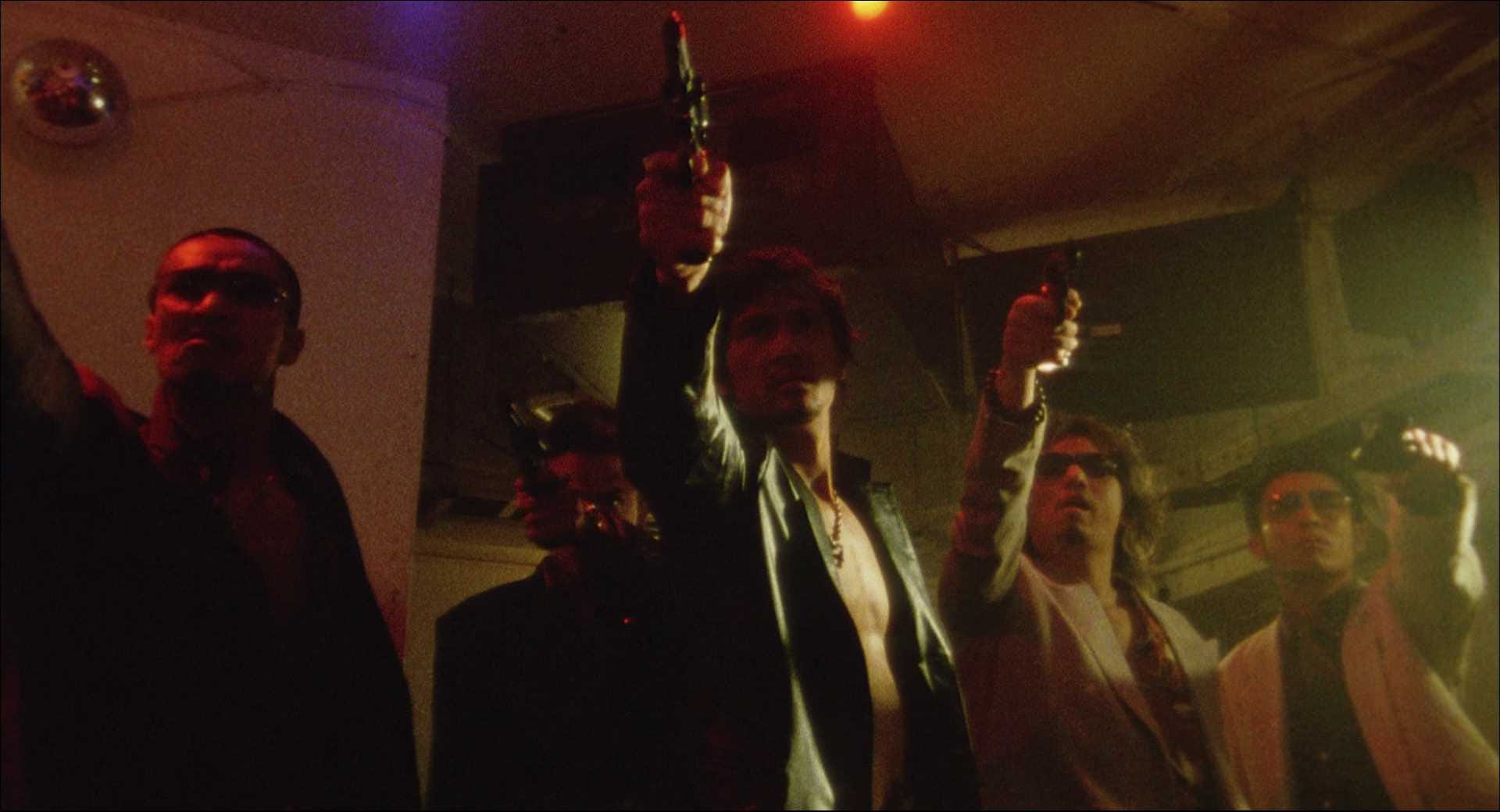
It’s here that we realize two things. This is a system that’s constantly reacting but can just as easily stall or reset itself without warning. It’s also very clear we’re now in Miike’s territory — another visceral, sharply stylized work from a filmmaker who thrives on disruption (or, perhaps more fittingly, agitation).
It’s worthwhile noting that Agitator came out in 2001 — the same year that Miike directed five other films: Ichi the Killer, The Happiness of the Katakuris, Visitor Q, Family, and its sequel. That Miike completed a sprawling gangster epic running 200 minutes in its extended cut (130 theatrically — I watched both via the Radiance release) is genuinely baffling. That said, here’s where it gets interesting: for a filmmaker undeniably known for his excess, Agitator does the opposite. Even with all its moments of the expected (and sometimes torturous) violence, it seems to delight more in the mundane, dwelling in that rootlessness before barreling toward the inevitable.
Agitator may be difficult to follow at the start, and that’s okay. Boiling it down, it follows a network of yakuza factions caught in an increasingly unstable power struggle, kicked off by a man named Kaito (Hiroki Matsukata, of Battles Without Honor and Humanity fame — a touchstone Agitator echoes, Miike-style). Alliances shift, tensions escalate, and everything ripples outward from a single point of conflict.
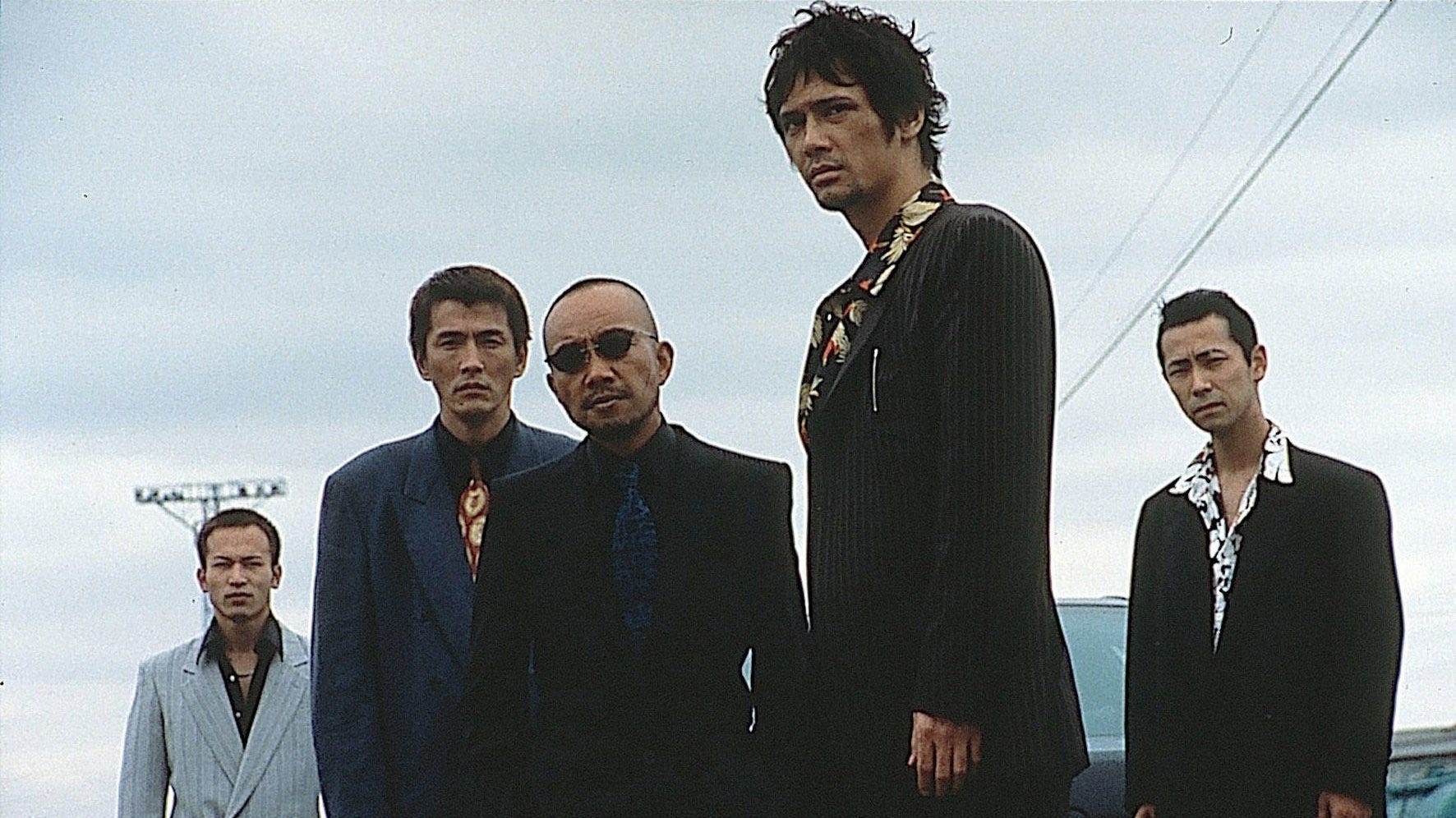
But for all its motion, Agitator is most powerful when it pauses, like when we’re made privy to a surprise birthday party or one-on-one bathhouse catch-ups. As Miike himself so perfectly put it in an interview for the Radiance release, “It’s not people committing crimes that makes it interesting. It’s the way that those people behave in that situation that gives rise to the story.”
This emotional core is best conveyed through the relationship between our lead, Kunihiko Kenzaki (Masaya Katô), and Yoichi Higuchi (the ever-cool Naoto Takenaka). Though he’s worked his way up as a lieutenant in the Higuchi gang, Yoichi is also Kunihiko’s closest friend — something revealed through the film’s flashbacks. Having known one another for 31 years, Yoichi serves as Kunihiko’s father figure; in the extended cut, we learn that Kunihiko’s mother abandoned him when he was a teenager, so Yoichi took him in earlier than he might have otherwise. As critic and historian of Japanese film, Tom Mes, writes in Agitator: The Cinema of Takashi Miike, “Miike’s outcast characters have a strong tendency to form groups. These serve as surrogate families characterized by a sense of belonging.”
Kunihiko’s loyalty is what ends up making him the titular agitator in Miike’s film, as his emotional dependence rests in Yoichi’s hands. As we watch the ripple effect of that first point of conflict pull Yoichi in, Kunihiko is ready to go to war for him. But the film doesn’t reward those who are incompatible with the system’s logic. During one dinner that they share, Yoichi tells Kunihiko to stop his tirade of revenge and accept that Kaito has “won the war.” While the younger man begs him to consider otherwise, Yoichi’s mind is made up — he knows how this world works, and he’s accepted it with a sense of calm that only comes from having lived in it for decades. Kunihiko, on the other hand, still believes in something beyond it. Ultimately, the film cannot metabolize this loyalty. “The unit must make an effort to stay together,” writes Mes of Miike’s filmography. “If the ties start to show strain, the end is nearly always inevitable.” In Agitator, that inevitability becomes a slow unraveling. The very thing that gives Kunihiko purpose — his devotion to Yoichi — also ensures his place within an engine that cannot sustain it. What begins as loyalty becomes friction, and that friction is enough to seal his destiny.

In a film that appears so driven by escalation, Agitator repeatedly makes room for moments that shouldn’t exist. Or, at least not in a narrative sense. It is in this way that I found myself thinking about Beat Takeshi’s cinema — films like Sonatine, where the violence stops to make way for something more human (I often point people to this film with the selling point: “You also get some yakuza fun in the sun!”). With his crime epic, Miike does the same. In one scene, a group of gangsters discusses a certain song as they drive, musing on who the artist is. Before we get an answer, they quickly exit the car, guns firing, before returning for their getaway, where we finally get an answer to the question. Other occasions, like pausing to listen to a piano being played before pivoting back to chaos, or something as basic as laundry duty, remind us that these are still real people — they’re just operating within a ruthless system of organized crime. In doing so, while these moments humanize the characters, they, more importantly, interrupt the system itself. The film’s momentum repeatedly stops to make way for something that has no place within it… only to be swallowed back up again.
While these pockets of banality are “routines” of yakuza living, the true routine of Agitator is violence. It may register as disruption, but in practice, it is what sustains the environment itself. After all, as Hirata (Kazuya Nakayama) wisely says at one point, “Honor doesn’t pay the bills anymore.” While some scenes are inarguably harrowing, many of the deaths are fast and clinical — presented and gone. So is the life of a yakuza, right? “There is one thing that binds the [familial] themes … and that’s that they all result in violence,” writes Mes.
“The characters’ outcast positions, the end of childhood and the disintegration of the group all result in what forms the surface of Takashi Miike’s films: the depiction of crime, violence, sex, vice, rape, narcotics and death. This is the world that the characters either find themselves in or create for themselves.”
— Tom Mes
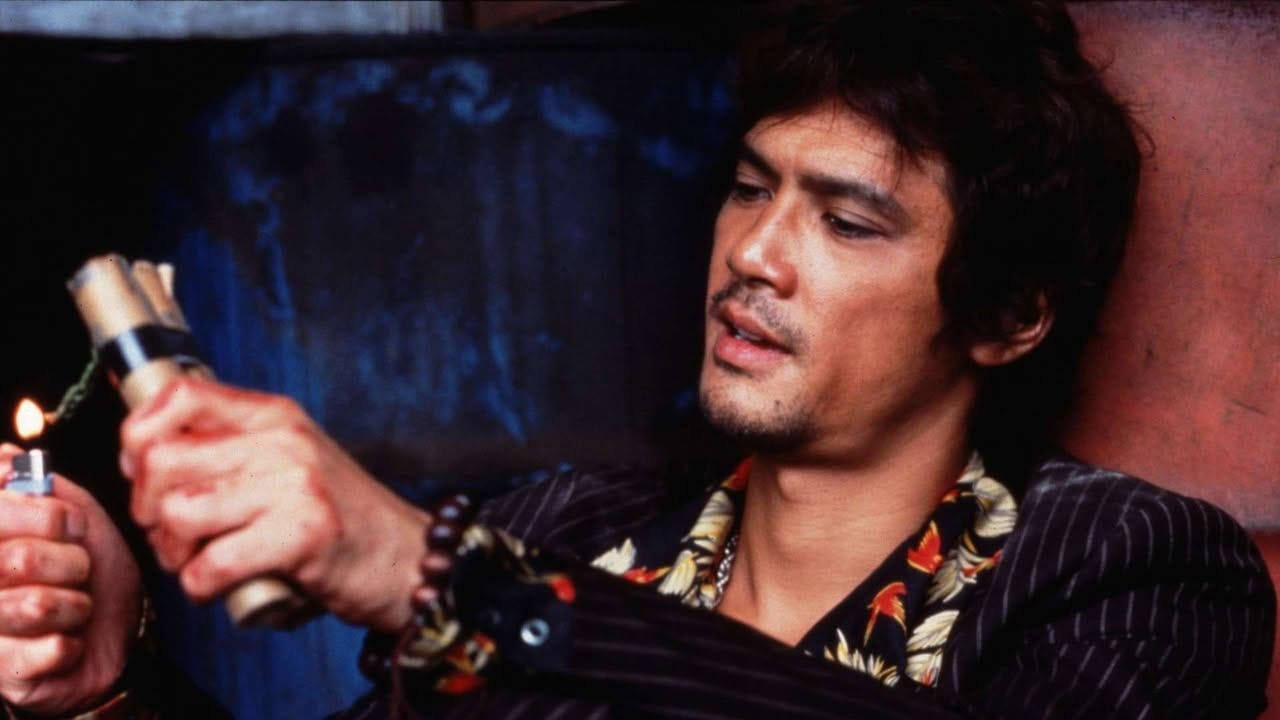
What’s most heartbreaking is how easily the violence in Agitator folds back into the very system that produces it. Within this dog-eat-dog world, it’s human attachment that causes real instability. In Agitator, escalation is constant, but does it ever produce any meaningful change? Of course not. Powers shift, alliances dissolve, all while betrayals stack one atop the other. Yet the structure itself remains intact, endlessly recalibrating without ever truly breaking.
The real rupture lies in the expressions of loyalty — bonds that cannot be absorbed without consequence. Kunihiko’s devotion to Yoichi is a structural liability, the same sort of tremor that reverberates through other men around him. This contradiction is distilled with brutal clarity in the film’s tagline — and in the words Sakuraba (Yoshiyuki Daichi) utters when Kunihiko runs to rescue him: “Thank you, fuck you.” It’s the film’s shorthand, collapsed into the same breath. Call it attachment and betrayal or gratitude and resentment, whatever it is, it forms the film’s beating heart. Violence sustains the machinery; human attachment threatens it.
All that we’re left with, then, are the people caught in this network. “It feels like an ensemble drama at times,” Miike says in the Radiance interview. “But each of the male characters, at least, is able to project themselves onto the role. They can find their own ideals inside it. They want to follow their desires, but they don’t have the courage. They know they can’t do it.”

And so, even with all its movement, Agitator reveals itself as a character drama shaped by those who exist unmoored, without stable ground. As Tom Mes observes, Miike’s characters are defined by this rootlessness, by identities that they can neither fully inhabit nor escape.
That brings us back to Kunihiko, who embodies this tension completely. His loyalty to Yoichi goes beyond devotion; it becomes a way to anchor himself in a world that offers no other sense of belonging.
“[These men] have this sense of longing like a child might. I think that’s really what’s at the root of every film in which yakuza appear.”
– Takashi Miike
Kunihiko’s final act of rebellion shouldn’t come as a shock — and is it even rebellion, anyway? Agitator shrugs off the question. It’s merely the system’s logic carried through to its natural end. There is no version of this story where loyalty survives intact. His final words, “When you go out, go out with a bang,” ring hollow, because what choice did he ever really have?
Even with all the acts of violence and invariably shifting hierarchies, what remains etched in the heart are those pockets of humanity that slip out of reach. In a world that never stops moving, the only moments that feel real are the ones that hesitate — and even those are fleeting, already on their way to slipping back into the very system that cannot sustain them.