


Listen, sometimes, you just gotta trust the physical media backlog.
I’ve had Tai Kato’s Blood of Revenge sitting in my “To Watch” pile for a while now, with Sadao Nakajima’s Aesthetics of a Bullet joining it several months later. Now, as I’m preparing to cover another year of the Vancouver International Film Festival (more on that in the weeks to come, because I have some other projects lined up with them, too!), I was staring dumbfounded at my stack and trying to figure out what else I could chat about before I officially become MIA until mid-October. Then I spotted these two yakuza flicks. Easy peasy.
Except… they go together in an even more intriguing way. Hear me out.
You see, only eight years separate Blood of Revenge (1965) and Aesthetics of a Bullet (1973). Eight! And yet, morally, they feel like they’re operating in totally different universes. In Kato’s film, the lead is trapped by what yakuza identity means, while in Nakajima’s, we’re stuck with a man trapped by what yakuza identity promises.
See what I mean? This is what makes this pairing so fun. Enough teasing. Let’s rewind and revive.
Blood of Revenge (Tai Kato; 1965)
Blood of Revenge caught me off guard immediately as it began, its confidence palpable. Two yakuza kneel beneath Tai Kato’s camera as sake is poured, the composition completely symmetrical. The frame then gradually expands and begins to turn as drums thunder, and more bodies reveal themselves across the screen. For a moment, this ostensibly unbreakable order dominates, until a knife enters the picture.
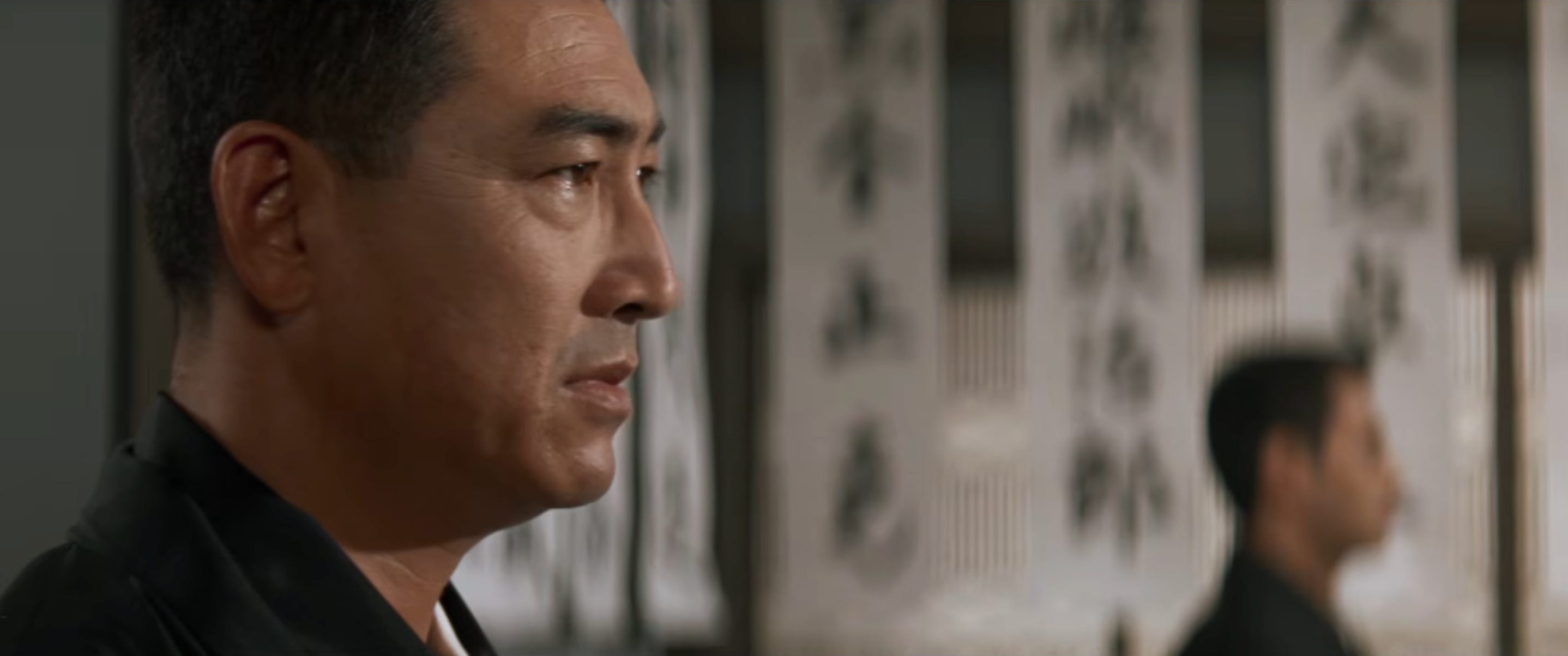
That sudden rupture starts to make sense once you settle into Kato’s 1965 ninkyo film, set in 1907 Osaka. Nearly everyone is trying to preserve some version of order while the world around them is slowly changing. At the center is Asajiro (Koji Tsuruta), a man with unshakable loyalty to his dying boss, thrust into responsibility for a yakuza organization, a legitimate business, and all the people attached to both. For Asajiro, honor comes above all, though resorting to violence is the last thing on his mind. He believes, sincerely, that an honorable man should somehow be capable of carrying both duty and feeling. If only things were so simple.
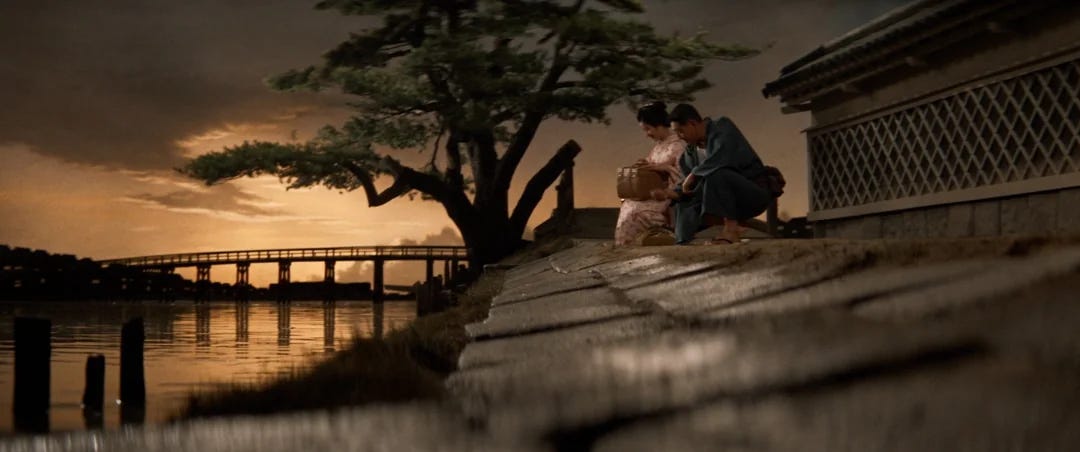
Hatsue (Sumiko Fuji), the geisha Asajiro loves, gives his conflict emotional weight; the clearest test of his impossible balance. Their relationship begins with pure kindness: he pays for a few days of her time so she can leave town and visit her dying father, asking for nothing in return. This gesture enrages the hot-headed Karasawa (Toru Abe), an enforcer working alongside the scheming rival boss Hoshino (Minoru Oki), who has paid for one of the days already. More on that later. When Hatsue and Asajiro finally admit their feelings for one another upon her return, duty comes knocking on the door shortly after. Asajiro’s boss is slowly dying, but he makes the conflicted decision to spend the time with Hatsue. By the time he returns, his boss has died in his absence, and the guilt attached to that single night changes everything.
When Asajiro is asked to succeed him, his boss’ inexperienced and spoiled son, Haruo (Masahiko Tsugawa), is enraged. Asajiro, ever noble, accepts, but wastes no time drawing a boundary between the yakuza organization and the family’s legitimate construction business. After all, as his late boss always said, “violence has no place in business.” Instilling in Haruo the understanding that he should become a respectable businessman his father hoped he could be, he asks him to run the business, while he’ll be in charge of the yakuza organization. It’s an intriguing contradiction: Asajiro accepts that he himself cannot shed the identity literally tattooed onto his back, yet he still believes he can protect the next generation from being consumed by it.
Heartbreakingly, his decision also seals his relationship with Hatsue. At this point, Karasawa has bought her, and she runs back to Asajiro, begging him to take her away. He refuses. His responsibilities have changed, he tells her; he is no longer the man he was. Kato then gives the audience one of the film’s most devastating sequences, cutting between Asajiro’s formal succession ceremony and Hatsue riding away in a carriage toward her new home, while a song about love surrendered to honor plays mournfully.
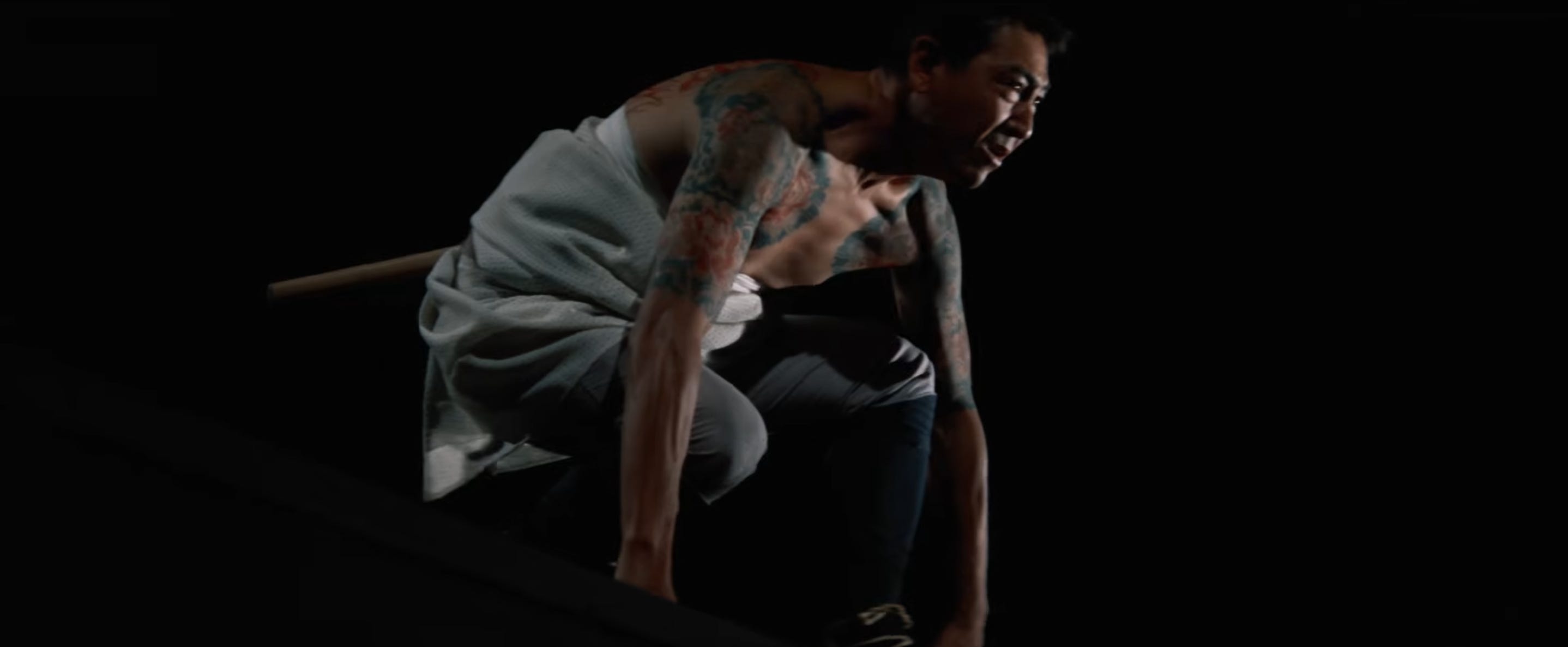
As double-crossing abounds by way of Asajiro and Haruo’s professional rivals, our hero keeps showing remarkable restraint, until finally, the ultimate betrayal erupts. Just as the beginning of the film confidently announced a world of order, this eruption declares the film’s title: Asajiro is out for blood-soaked revenge. The man who has spent the entire runtime containing himself strips down to his tattoos and is consumed by unadulterated rage. The road to the supreme tragedy has reached its end. Asajiro has managed to preserve nearly everything he believed he was responsible for, except, perhaps, the life that, in another world, he might have chosen for himself.
You can purchase Blood of Revenge via Radiance or MVD Shop.
Aesthetics of a Bullet (Sadao Nakajima; 1973)
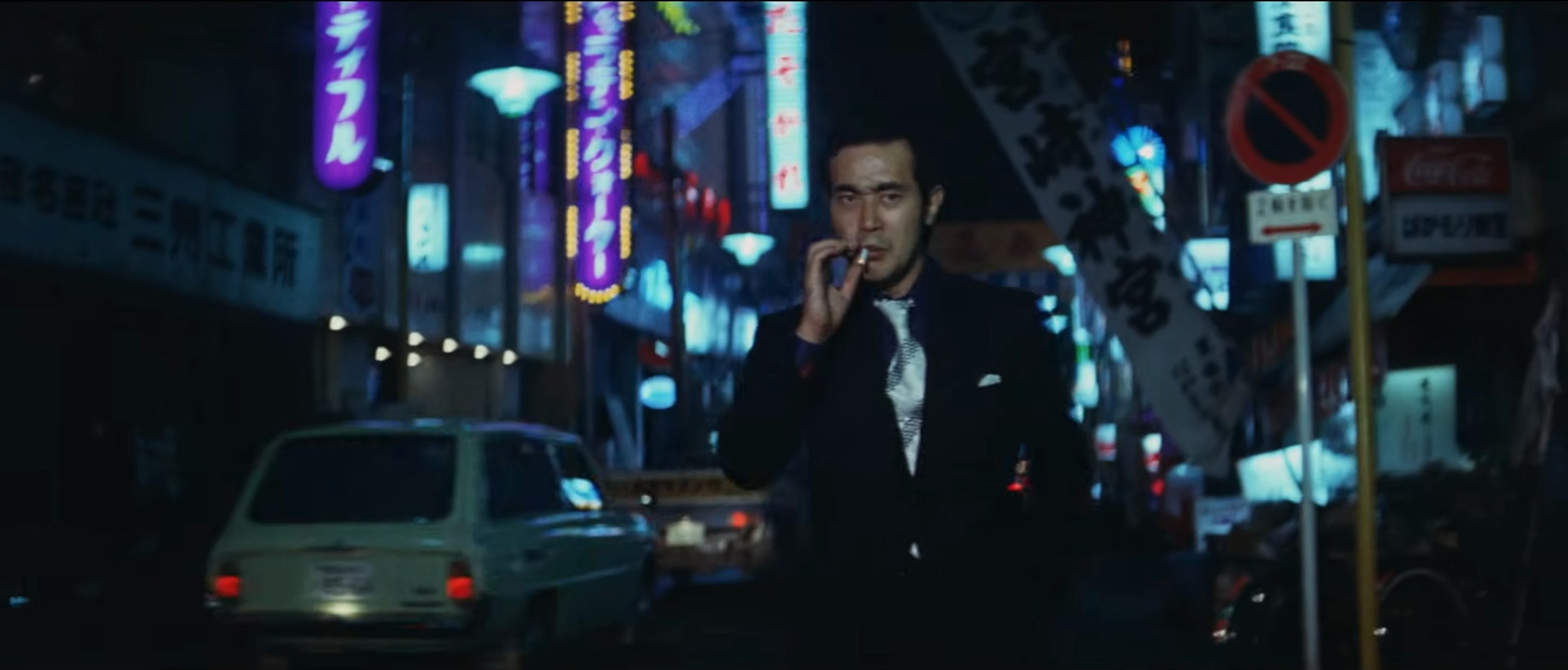
Imagine sitting near the bottom of that economic food chain, and suddenly being handed a shortcut. Sure, you skirt past any formalities or training, but that shouldn’t matter, right? You’ve been handed a golden ticket. Sadao Nakajima’s Aesthetics of a Bullet wastes absolutely no time announcing that this isn’t going to be a stately world of chivalric yakuza cinema. Sayōnara ninkyo eiga, kon’nichiwa to a grimier, disillusioned yakuza world of the 1970s. That shift is apparent before the yakuza themselves even appear. Blaring right as the title card drops, Japanese band The Brain Police delivers its proto-punk rhythms as we watch extreme close-ups of women shoveling food into their mouths cut between close-ups of garbage piling up. The indulgence suddenly stops, and 24-year-old Kiyoshi Koike (Tsunehiko Watase) finally appears, broke and peddling underfed rabbits on the street and losing money at mahjong.
He is, to put it kindly, a loser.
Koike lacks money and status; hell, he could use a sprinkle of luck and a dash of dignity, too. He borrows cash from his girlfriend only to gamble it away, and he doesn’t treat her well, either. Ignorance here doesn’t equate to bliss, but it doesn’t stop Koike from convincing himself that his circumstances are the only thing standing between him and greatness. A chef, he could have once been. Imagine! So, when an unseen yakuza organization hands him a pile of money, a gun, and their clan’s name in exchange for causing some trouble, Koike practically gets Looney Tunes dollar signs in his eyes.
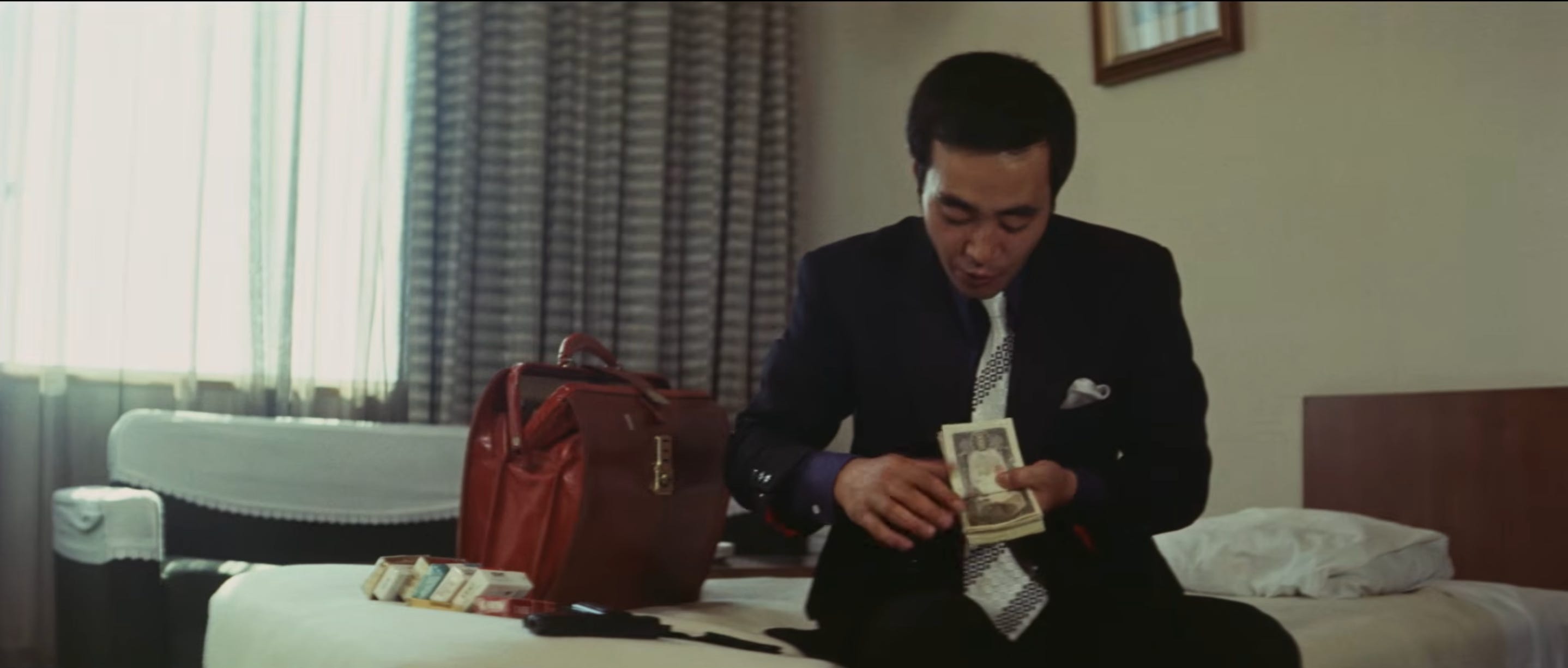
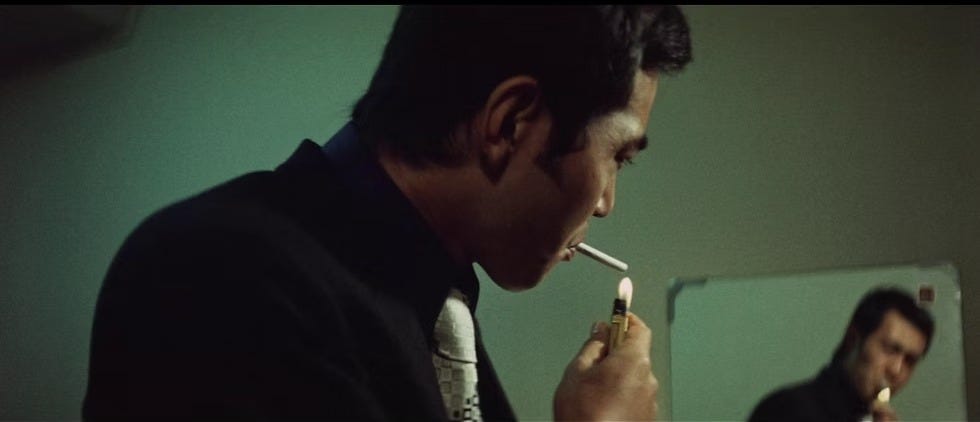
Now is where I urge you to remember the film’s title. As soon as Koike touches down in Miyazaki, we see how seriously he takes these gangster aesthetics. Buy suit → add gun → Instant Important Man. Let’s grab the most expensive hotel room, too! After he settles in, Koike decides to spend some time in front of the mirror rehearsing, “I’m Kiyoshi Koike of the Tenyu clan,” over and over, until he thinks he finally nailed the delivery. But… did he? Let’s try once more for good measure, but this time, with a cigarette. There. Much better.
The punchline, of course, is that Koike believes he has finally become somebody. The men who sent him see him as ammunition. The bullet, so to speak. And one thing to remember about bullets is that they don’t choose where they are aimed.
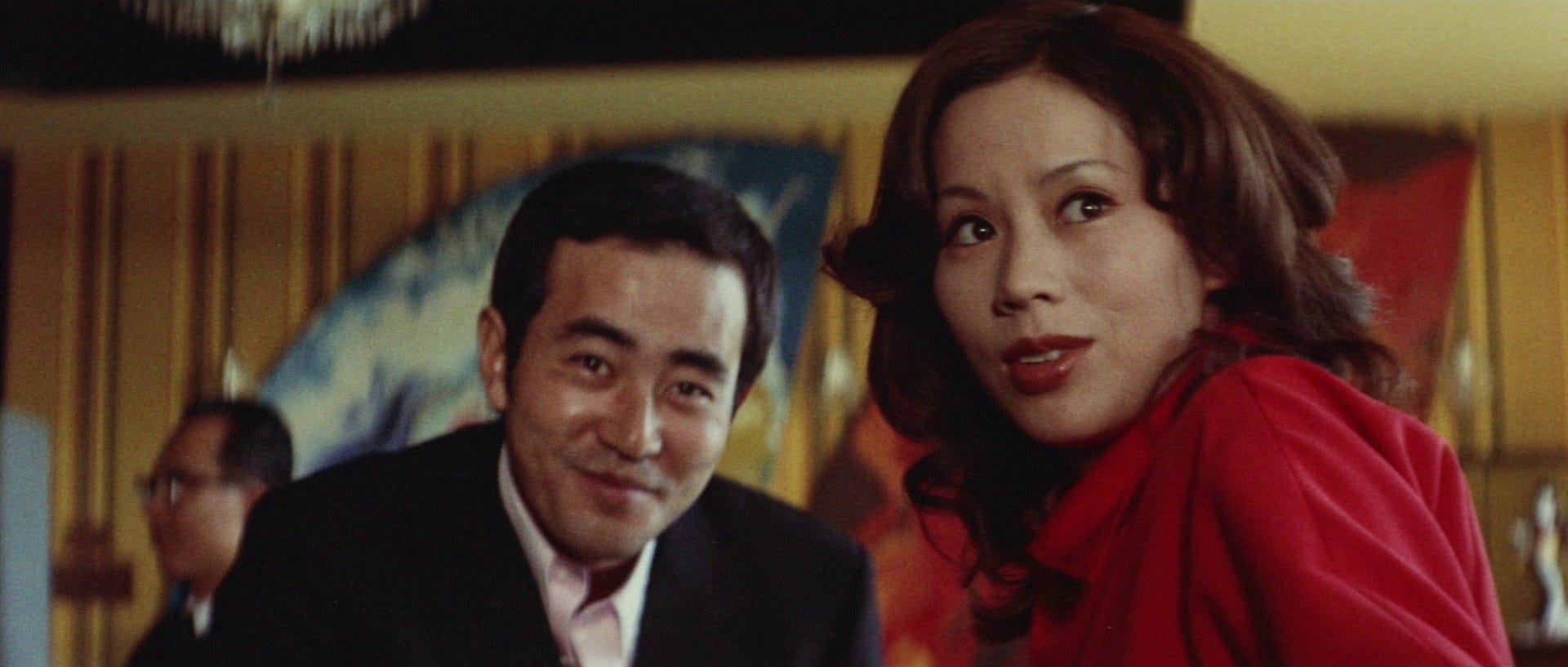
For a while, this cosplay paints a pretty picture. Men back down when Koike flashes his gun and invokes the Tenyu name, while women surround him in clubs as he flaunts his wealth and spiffy suit. After yearning for something more in his life for so long, every interaction confirms the fantasy back to him. Maybe he really has become somebody.
Turns out, a suit, a cigarette, and a gun can only do so much heavy lifting. Even with all these aesthetics, the old Koike keeps peeking through the costume. He becomes comically attached to his gun, constantly pulling it out to polish it, admire it; he even falls asleep cradling the damn thing. Yet the very moment he actually needs to use the gun, the swagger evaporates. In one brilliant sequence, Koike stares at it before we get a sudden flash to a stylized image of a man being shot. Seconds later? Our newly minted gangster is curled into a fetal position on his hotel bed, crying alone.
Nakajima keeps turning the dial on this contradiction, until it becomes increasingly cruel. Koike has been handed all the symbols of power, but none of them are really his. Turns out, being the “bullet” is much more appealing when nobody actually expects you to hit the target. Who would have thought!
What surprised me is that Nakajima never settles for humiliating Koike solely for our amusement. Make no mistake, he’s utterly vile. He repeatedly mistreats the women around him and lashes out whenever his fragile ego is threatened. But the film keeps showing us a frightened man underneath all that posturing. For perhaps the first time in his life, Koike has been given access to seemingly endless riches, but the cruelest joke is that he mistakes access for ownership. Koike thinks he’s finally become somebody. Nakajima knows he’s just been given better props.