


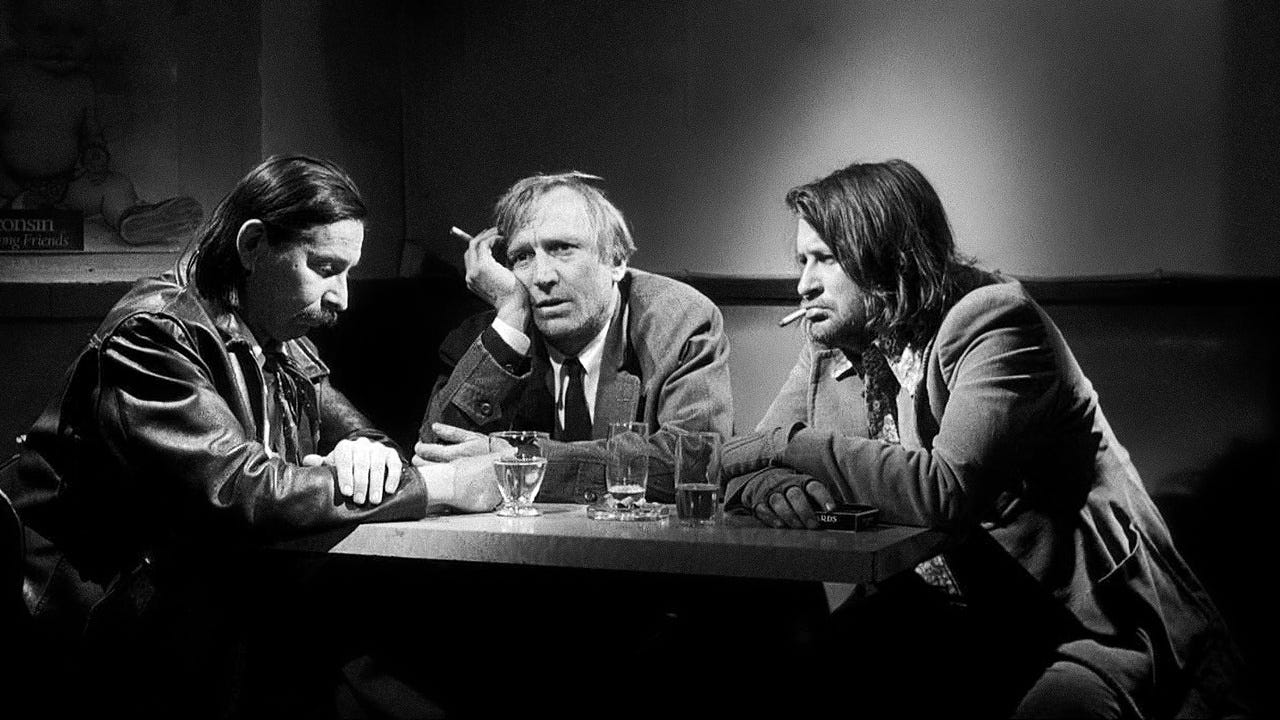
Between the holidays creeping closer, weeks of relentless Pacific Northwest rain, and a self-inflicted sugar cookie coma, things have slowed down a bit at Rewind & Revive. But rest assured — good (and riveting) things are on the way, dear reader.
Alongside working through my ever-growing Blu-ray stack (while also trying to catch up on new releases before the end of the year, help me), I’ve been developing my next podcast episode, dedicated to Harry Kümel’s Malpertuis, in honor of the recent (and gorgeous) Radiance Films release.
For today, however, I bring you yet another physical media round-up, this time with offerings from The Criterion Collection, Cult Epics, and Radiance once more. While I initially planned to add a fifth film, I opted for tasteful restraint; the four films below form a (surprisingly) coherent emotional and thematic arc. The movies I’ve chosen all operate on a distinctly human scale, tracking people under pressure and the ways they look after one another. Friendship, care, and imagination aren’t grand answers here — just the things that help everyone get through the day.
They’re all wonderful (in fact, the Aki Kaurismäki film included here has already become my favorite of the ten of his I’ve seen so far), and I hope they delight you as much as they have me. Without further ado, let’s rewind and revive.

The Ogre of Athens (Nikos Koundouros; 1956)
At the start of The Ogre of Athens, Thomas (Dinos Iliopoulos) isn’t disliked, nor is he feared. He’s simply… invisible. So when people finally begin to notice him (even if it’s out of fear), it hits a primal nerve — one he didn’t even realize he was starving for. Better to be an ogre than nobody at all.
Set in jittery post–Civil War Athens, Nikos Koundouros’ sophomore feature begins by flirting with both noir and neorealism before gradually dissolving into absurd fable. We’re shown a Greece still recovering from occupation and internal conflict, where fear spreads as fast as a rumour in a crowded street — and the city is a pressure cooker. On New Year’s Eve, the stiff, anxious bank clerk Thomas is suddenly mistaken for the titular Ogre: a crime boss who’s been impossible to capture. Seeking refuge after wading through thick paranoia, he stumbles into a taverna, and it’s a whole other world: joyous, chaotic, pulsing with music, dancing, and drink. Better yet, the morally questionable patrons here don’t fear Thomas. They revere him.
After some hesitation, Thomas embraces his role as criminal kingpin. What struck me most is that this “wrong man” trope isn’t used as a mere plot device. When Thomas gently urges love interest “Baby” (Margarita Papageorgiou) to appreciate those who care for her, we realize he and the real Ogre share the same isolating loneliness. If the absence of conscience shapes one, the absence of identity shapes the other. Of course slipping into the Ogre’s skin doesn’t feel like a costume.
As the hours pass and Thomas begins bonding with the taverna owner (Giannis Argyris) and his men, he’s swept into a heist: stealing a pillar from the Temple of Zeus for an American buyer — because nothing says “modern Greece” like exporting your ancient identity for cash. Koundouros keeps tugging at the film’s central tension: imported modernity versus tradition. On the taverna walls, Joan Crawford and Clark Gable grin down like glamorous saints of a future Athens hasn’t fully been invited into. These “criminals” aren’t hardened villains, either; they just want out of scarcity, even if it means chipping away at the stones their city was built on.
Masculinity, already brittle post-war, latches onto any power it can find, and for one intoxicating night, Thomas lets himself be lost in it. The film’s most powerful moment arrives in a whirl of zeibekiko stomps and clinking glasses as our lead joins in. Through the sweat and the sudden sense of freedom, it all fuses like a rebirth.
The Greeks love a tragedy, but the tragedy here isn’t that Thomas’ transformation was thrust upon him. Instead, he chose it, bit by bit, himself. “All my life, I’ve avoided a fuss,” he says. And that’s what undoes him.
You can purchase The Ogre of Athens via Radiance Films or MVD Shop.

School in the Crosshairs (Nobuhiko Obayashi; 1981)
Adolescence can be both magical and terrifying. In Nobuhiko Obayashi’s School in the Crosshairs, it happens to be both, often at the same time. The opening fools you into thinking this is bubbly pop-idol movie fare, with scrapbook-style cutouts of a teenage bedroom and the incredibly sweet (and very catchy) opening song “I Want to Protect You” by Yumi Matsutoya. For a moment, the film feels like the cinematic equivalent of a heart-shaped sticker… until the title card drops and the music turns ominous.
Hiroko Yakushimaru is wonderful as Yuka, a girl who suddenly discovers she has telekinetic abilities just as her school slips into the hands of a mind-controlled student government. A new transfer student (Masami Hasegawa) with the same powers becomes the student council president and, along with her nerdy yet villainous sidekick (played by Makoto Tezuka, son of the Osamu Tezuka behind Astro Boy and Kimba the White Lion), builds a team of uniformed patrol guards, bans individuality, and swiftly turns students into obedient zombies. Anyone who dares to call it what it is (like the poor P.E. teacher who blurts out “fascism!”) soon finds themselves in a suspicious “accident.” Obayashi isn’t subtle about what terrifies him: youth systems that prioritize obedience over imagination and creativity.
Visually, it’s a treat to see Obayashi go full “live-action cartoon” mode. Neon scribbles outline characters like someone’s doodling inside the frame. A school event casually morphs into a dance sequence with the confidence (and meticulous choreography) of a full-blown musical. Another day sees a brief teenage existential crisis backed by a literal white-tuxedoed jazz band outside the school. And when the leading Bad Guy Kyogoku (Tōru Minegishi) spins through a piano solo in front of a blue-screen prism, it’s pure cinematic delirium.
What makes all this spectacle matter is Obayashi’s deep sympathy for young people. Yuka’s powers become a metaphor for puberty; frightening when suppressed, liberating when embraced. The school turns into a miniature society eager to mold kids into compliant citizens, and Obayashi makes a compelling case that rebellion, even when goofy, is how they keep their souls intact.
You can purchase School in the Crosshairs via Cult Epics.
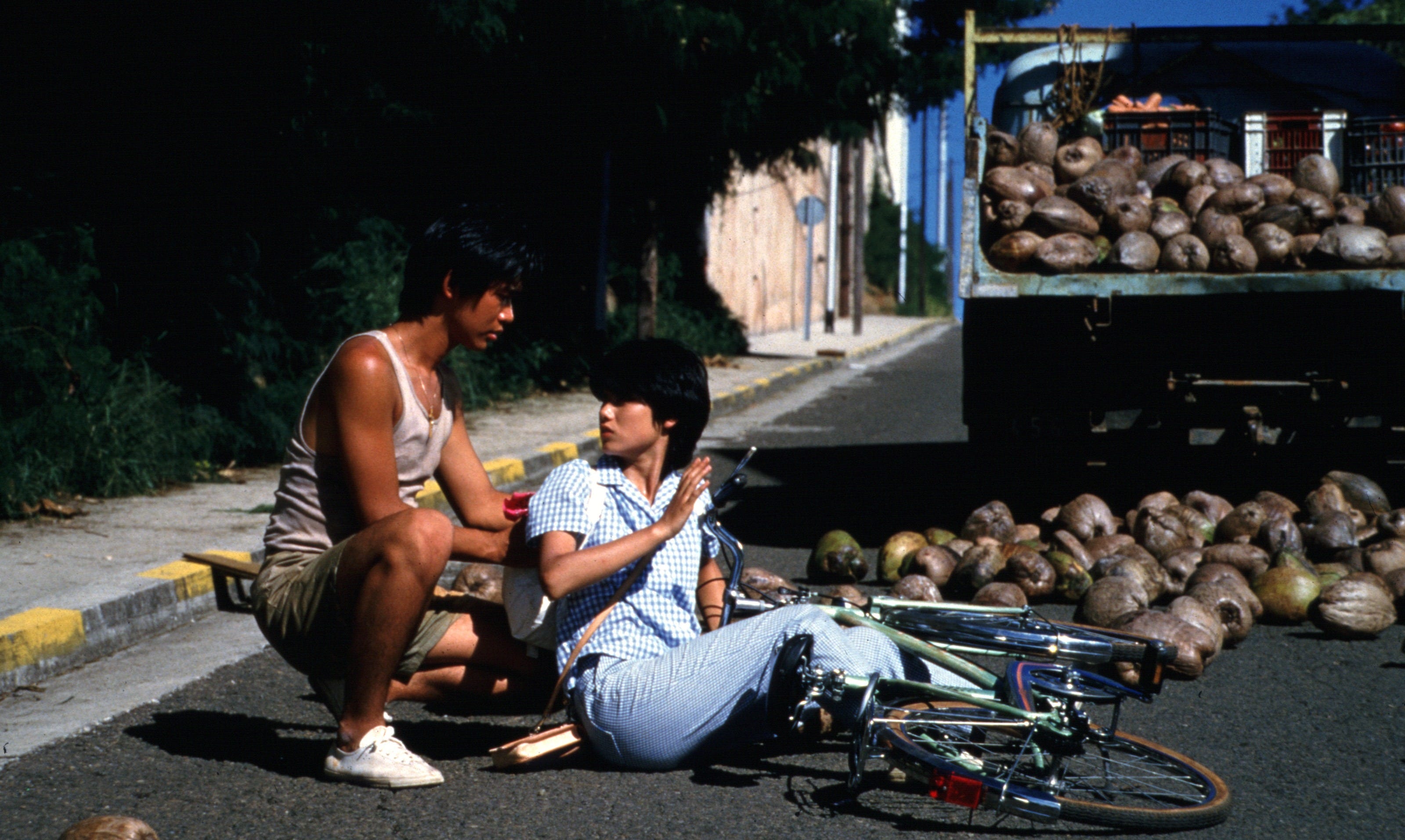
The Island Closest to Heaven (Nobuhiko Obayashi; 1984)
How fragile and dizzying the world can feel when you’re young and uncertain.
(Nobuhiko Obayashi’s vision of youth and imagination surfaces once more in this roundup — and this film captures its gentlest form).
Perhaps the breeziest entry in Obayashi’s ouvré that I’ve seen, The Island Closest to Heaven is based on Katsura Morimura’s successful 1966 travelogue of the same name, revolving around a teenage girl, Mari (Tomoyo Harada), who heads to New Caledonia to realize her late father’s dream of finding the place “closest to heaven.” While Obayashi captures the travelogue ambiance beautifully (so many lush glimpses of flora and fauna!), the film also feels like a postcard to your younger self; the version of you who believes that if you wander far enough, maybe the world will finally start to make some sense.
Obayashi often uses narratives where youth is a site of rebellion, but here it’s much calmer. The island functions less as a location and more as a transitional space, where every interaction helps Mari make a bit more sense of what she’s actually here to do. Of course, Obayashi’s playfulness still peeks through, though much more subtly. An array of quirky supporting characters keeps things light, while color overlays and brief jump-cut moments add just enough whimsy to keep the movie from drifting into pure melancholy.
Much of The Island Closest to Heaven reminded me of what a live-action Studio Ghibli film might feel like, where a heroine’s exploratory nature and quiet coming-of-age lead to the realization that the “paradise” you’re chasing may already be all around you. Instead of a destination, it’s the people who help you get where you’re going.
I wasn’t expecting Obayashi to mix all that gentleness with these sudden flashes of MGM-style romance, but he does. Those glimmers are most evident in the title sequence, with sweeping credits set against a pastel frame and music that plays like a Technicolor fairy tale. It also has that classic Hollywood ache that promises adventure, heartbreak, and the marriage of love and loss.
I’d be remiss not to mention that The Island Closest to Heaven is still very much a product of its time. Its view of New Caledonia leans into an ’80s tourism fantasy, where nearly every local offers help with an effortless smile, and Mari’s older mentor figure, Yuichi (Tôru Minegishi), occasionally raises eyebrows with the age gap. That boundary is never crossed (their dynamic remains rooted in guidance), but it briefly jars against the story’s otherwise tender sincerity.
What ultimately stays with you is the film’s abiding kindness. It’s in the moment Yuichi tries to show Mari the “green ray,” hoping to give her a bit of emotional orientation (I beamed seeing this Jules Verne reference turn up just a few years before Rohmer’s classic), and in the way the village children gather around her bed after she wakes from an accident. By the time she returns home, it hits you that her paradise wasn’t actually a place at all. Instead, it’s the feeling of being held by the world, even when you’re still figuring out where you belong.
You can purchase The Island Closest to Heaven via Cult Epics.
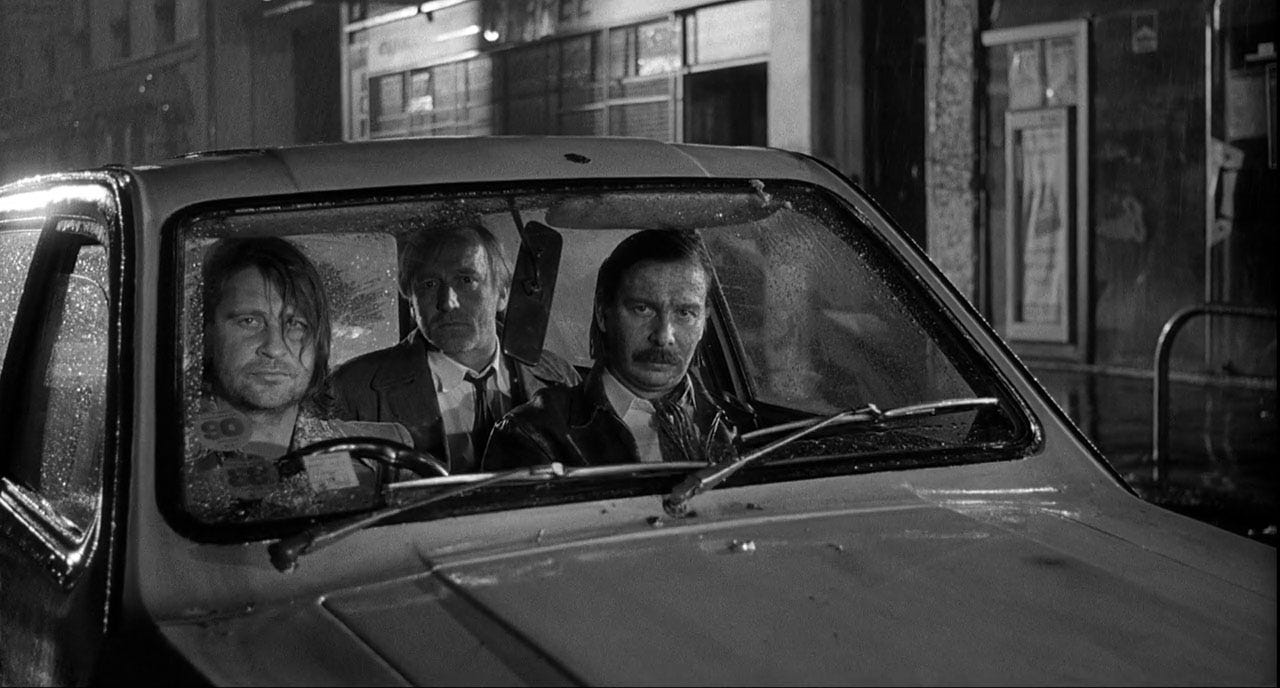
La Vie de bohème (Aki Kaurismäki; 1992)
When money is scarce, making art can feel both exhilarating and ruthlessly cruel. There’s a quiet dignity in that precarity, and one that’s easy to recognize if you’ve lived it yourself. People doing their best in a world that doesn’t seem particularly interested in rewarding dreamers — at least not the ones without safety nets. And yet… they keep dreaming anyway. Art doesn’t save you, but it does give your suffering shape, and sometimes, it gives you each other.
I’ve always connected to Aki Kaurismäki’s films and the melancholy that surrounds his characters. It’s a working-class relatability he consistently nails, leaving you unsure whether to laugh or cry as he captures how life can be equally ridiculous and bitter. With 1992’s La Vie de bohème, he hits his familiar beats while reminding us that the world’s callousness is often best endured with a friend, a cigarette, and a bad cup of coffee (or whiskey).
In 1976, Kaurismäki read Henri Murger’s 1848 novel Scènes de la vie de bohème, immediately deciding he would adapt it someday. Though he initially imagined filming it in Helsinki, he recalled Murger’s declaration in the introduction — that bohemian life is only possible in Paris. Married to the idea, he waited until the opportunity arose, ultimately choosing not the capital itself but the suburb of Malakoff. Seeking authenticity, Kaurismäki realized that shooting in modern-day Paris would detract from the grimy, run-down look he wanted for the film. The result is marvelous, and I was often nudging myself to remember that this wasn’t, in fact, shot in 1950s or early ’60s France. Opening with a rooftop shot set to Damia’s crooning “Chantez pour moi, violons,” it’s hard not to be immediately whisked away.
The film brings together three men adrift in Paris: Marcel (André Wilms), a recently evicted playwright and poet; Rodolfo (Matti Pellonpää), an Albanian painter unable to sell his work; and Schaunard (Kari Väänänen), an Irish composer of stubbornly experimental music. As the trio bonds over their love of the arts, they become a bohemian version of the Three Musketeers, using friendship as a form of shelter when money, stability, and even love flutter away. Kaurismäki’s hangout energy feels oddly cozy here, inviting us to see home as the quiet solidarity found in shared meals and shared disappointments.
Life in La Vie de bohème moves in cycles. The men hover just above the poverty line, stumble into sudden bursts of creativity (and occasional luck, courtesy of an art collector played by Jean-Pierre Léaud and Sam Fuller as a gangster-publisher), enjoy fleeting moments of security, and then face the inevitable collapse of it all. Instead of melodrama, Kaurismäki offers familiarity: his characters have lived this pattern countless times, each devastation rendered routine.
Remember, though, routine devastation is easier to endure when your sense of self is bound up in the struggle itself. The women in La Vie de bohème aren’t wired this way. Where their love interests cling to ideals, both Mimi (Évelyne Didi) and Musette (Christine Murillo) navigate reality. Though they care (and oh, how deeply they care), rational self-preservation comes first. As Mimi heartbreakingly tells Rodolfo, “I love you, you know, but life is hard.”
Instead of offering escape or solutions, La Vie de bohème offers recognition. Kaurismäki never pretends this is enough to fix the world, but he does suggest that the simple act of showing up might be enough to survive it with dignity. One for all and all for one, after all.